
Vedic Age & Religious-Philosophical Developments – Chronological and Era-Wise History of India
Vedic Age & Religious-Philosophical Developments – Chronological and Era-Wise History …

Overview
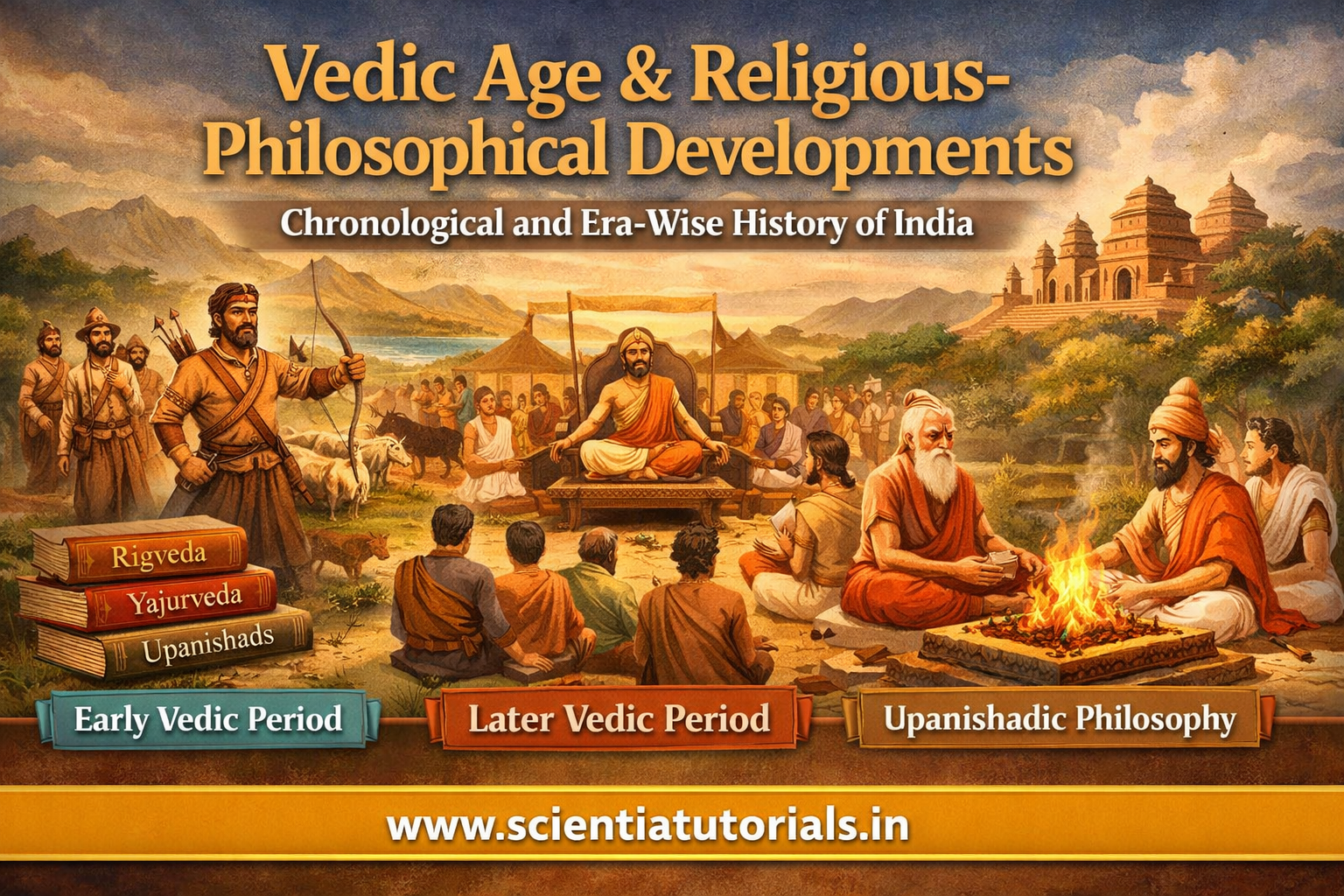

Vedic Age & Religious-Philosophical Developments – Chronological and Era-Wise History of India
In this Course, each Lesson under the Modules is divided into 4 Sections, as mentioned below:
- Study Module with Revision Notes,
- Questions with Answers,
- MCQs with Answers and detailed explanations.
Module-wise Breakdown of Lessons for Online Learning
This online learning course offers a comprehensive, chronological, and evidence-based understanding of the History of India, with special focus on controversial events, debates, and critical interpretations. Designed for both conceptual clarity and exam readiness, the course strengthens analytical thinking, source evaluation, and answer-writing skills required in competitive examinations.
The content is highly relevant for aspirants preparing for UPSC (CSE), State PSCs (APSC, UPPSC, BPSC, MPPSC, MPSC, WBCS, RPSC, TNPSC, etc.), UGC-NET/JRF, CUET (UG/PG), SSC, NDA, CDS, CAPF, as well as CBSE, ICSE, State Board examinations, and college/university undergraduate and postgraduate courses where History of India is a core subject.
Module 1: Introduction to the Vedic Age
Timeline: c. 1500 BCE – 600 BCE
Overview
This module introduces the Vedic Age as a crucial phase of Ancient Indian history, explaining its historical importance, chronological span, and relevance in the evolution of Indian religious and philosophical thought.
Key Characteristics
-
Transition from Protohistoric to Early Historic India
-
Composition of Vedic literature
-
Foundations of Indian religion and philosophy
Lessons
-
Vedic Age in Ancient Indian History: Meaning, Scope, and Importance
-
Chronology of the Vedic Age: Early and Later Vedic Phases
-
Sources for the Study of the Vedic Period
-
Vedic Age and Its Place in the History of India (Ancient Period)
Module 2: Early Vedic Age (Rigvedic Period)
Timeline: c. 1500 BCE – 1000 BCE
Overview
This module focuses on the Early Vedic or Rigvedic phase, highlighting its pastoral economy, tribal society, political institutions, and nature-based religious beliefs.
Key Characteristics
-
Pastoral-nomadic economy
-
Tribal political organisation
-
Simple social structure
-
Nature worship and hymnal religion
Lessons
-
The Rigvedic People: Origin, Migration, and Settlement
-
Literary Sources of the Rigvedic Period – Rigveda
-
Rigvedic Society: Family, Women, and Social Organisation
-
Economic Life in the Rigvedic Period: Pastoralism and Wealth
-
Political Institutions: Sabha, Samiti, and Early Kingship
-
Rigvedic Religion: Gods, Nature Worship, and Ritual Practices
Module 3: Transition from Early to Later Vedic Phase
Timeline: c. 1000 BCE
Overview
This module examines the transitional phase marked by agrarian expansion, territorial settlements, and increasing social and ritual complexity.
Key Characteristics
-
Shift from pastoralism to agriculture
-
Expansion into the Ganga-Yamuna plains
-
Increasing ritualism and priestly influence
Lessons
-
Geographical Expansion of the Vedic People
-
Economic Transformation: Agriculture, Iron, and Surplus
-
Changing Social Relations and Emerging Hierarchies
Module 4: Later Vedic Age
Timeline: c. 1000 BCE – 600 BCE
Overview
This module analyses the Later Vedic Age marked by social stratification, complex rituals, and the emergence of early state systems.
Key Characteristics
-
Fully developed varna system
-
Hereditary kingship and territorial states
-
Elaborate sacrifices and priesthood dominance
Lessons
-
Later Vedic Literature: Samhitas, Brahmanas, and Aranyakas
-
Social Structure in the Later Vedic Period: Varna and Ashrama
-
Position of Women and Family System in Later Vedic Society
-
Economy of the Later Vedic Period: Agriculture, Trade, and Crafts
-
Political Organisation: Kingship, Administration, and Assemblies
-
Later Vedic Religion: Yajnas, Sacrifices, and Ritual Formalism
Module 5: Rise of Religious Ritualism and Priesthood
Timeline: c. 1000 BCE – 700 BCE
Overview
This module explains the growing dominance of rituals and priests and the social consequences of complex sacrificial practices.
Key Characteristics
-
Expansion of yajnas and sacrifices
-
Increased authority of Brahmanas
-
Social inequality and ritual expenses
Lessons
-
Evolution of Vedic Sacrificial System
-
Role of Brahmanas and Priestly Authority
-
Social Impact of Ritualism in the Later Vedic Age
Module 6: Upanishadic Age – Philosophical Transition
Timeline: c. 800 BCE – 600 BCE
Overview
This module marks the intellectual shift from ritualism to philosophical inquiry, forming the core of Indian spiritual thought.
Key Characteristics
-
Critique of ritualism
-
Emergence of speculative philosophy
-
Search for ultimate truth and liberation
Lessons
-
Emergence of the Upanishads as Philosophical Texts – Upanishads
-
Concept of Brahman: Ultimate Reality
-
Concept of Atman: The Individual Soul
-
Karma, Samsara, and the Doctrine of Rebirth
-
Moksha: Liberation and Paths to Salvation
-
Teacher–Student Tradition and Gurukula System
Module 7: Historical Significance and Legacy of Vedic Thought
Timeline: c. 600 BCE onwards
Overview
This module evaluates the long-term impact of Vedic and Upanishadic ideas on later Indian religions, philosophies, and society.
Key Characteristics
-
Influence on Hindu philosophy
-
Foundations for later religious movements
-
Enduring cultural and ethical values
Lessons
-
Contribution of the Vedic Age to Indian Civilisation
-
Vedic and Upanishadic Ideas in Later Hinduism
-
Vedic Philosophy and the Rise of New Religious Movements
-
Relevance of Vedic Thought in Indian History and Culture
✅ Course Completion Outcome
After completing this course, learners will gain a clear chronological understanding, strong conceptual clarity, and exam-oriented mastery of the Vedic Age and its religious-philosophical developments—essential for school exams, undergraduate studies, and competitive examinations.
Curriculum
- 7 Sections
- 32 Lessons
- Lifetime
- Module 1: Introduction to the Vedic Age Timeline: c. 1500 BCE – 600 BCEThis module introduces the Vedic Age as a crucial phase of Ancient Indian history, explaining its historical importance, chronological span, and relevance in the evolution of Indian religious and philosophical thought.4
- Module 2: Early Vedic Age (Rigvedic Period) Timeline: c. 1500 BCE – 1000 BCEThis module focuses on the Early Vedic or Rigvedic phase, highlighting its pastoral economy, tribal society, political institutions, and nature-based religious beliefs.6
- 2.1The Rigvedic People: Origin, Migration, and Settlement
- 2.2Literary Sources of the Rigvedic Period – Rigveda
- 2.3Rigvedic Society: Family, Women, and Social Organisation
- 2.4Economic Life in the Rigvedic Period: Pastoralism and Wealth
- 2.5Political Institutions: Sabha, Samiti, and Early Kingship
- 2.6Rigvedic Religion: Gods, Nature Worship, and Ritual Practices
- Module 3: Transition from Early to Later Vedic Phase Timeline: c. 1000 BCEThis module examines the transitional phase marked by agrarian expansion, territorial settlements, and increasing social and ritual complexity.3
- Module 4: Later Vedic Age Timeline: c. 1000 BCE – 600 BCEThis module analyses the Later Vedic Age marked by social stratification, complex rituals, and the emergence of early state systems.6
- 4.1Later Vedic Literature: Samhitas, Brahmanas, and Aranyakas
- 4.2Social Structure in the Later Vedic Period: Varna and Ashrama
- 4.3Position of Women and Family System in Later Vedic Society
- 4.4Economy of the Later Vedic Period: Agriculture, Trade, and Crafts
- 4.5Political Organisation: Kingship, Administration, and Assemblies
- 4.6Later Vedic Religion: Yajnas, Sacrifices, and Ritual Formalism
- Module 5: Rise of Religious Ritualism and Priesthood Timeline: c. 1000 BCE – 700 BCEThis module explains the growing dominance of rituals and priests and the social consequences of complex sacrificial practices.3
- Module 6: Upanishadic Age – Philosophical Transition Timeline: c. 800 BCE – 600 BCEThis module marks the intellectual shift from ritualism to philosophical inquiry, forming the core of Indian spiritual thought.6
- Module 7: Historical Significance and Legacy of Vedic Thought Timeline: c. 600 BCE onwardsThis module evaluates the long-term impact of Vedic and Upanishadic ideas on later Indian religions, philosophies, and society.4

Course Features
- Lectures 32
- Quiz 0
- Duration Lifetime access
- Skill level All levels
- Language English
- Students 0
- Assessments Yes