
Advent of Europeans & Colonial Expansion – Chronological and Era-Wise History of India – MCQs
Course Overview Advent of Europeans & Colonial Expansion – Chronological and Era-Wise History of India – MCQs is an exam-oriented course covering the arrival of European powers in India and the gradual expansion of European commercial and political influence. It explores the Portuguese, Dutch, English, French, and other European trading …

Overview
Course Overview
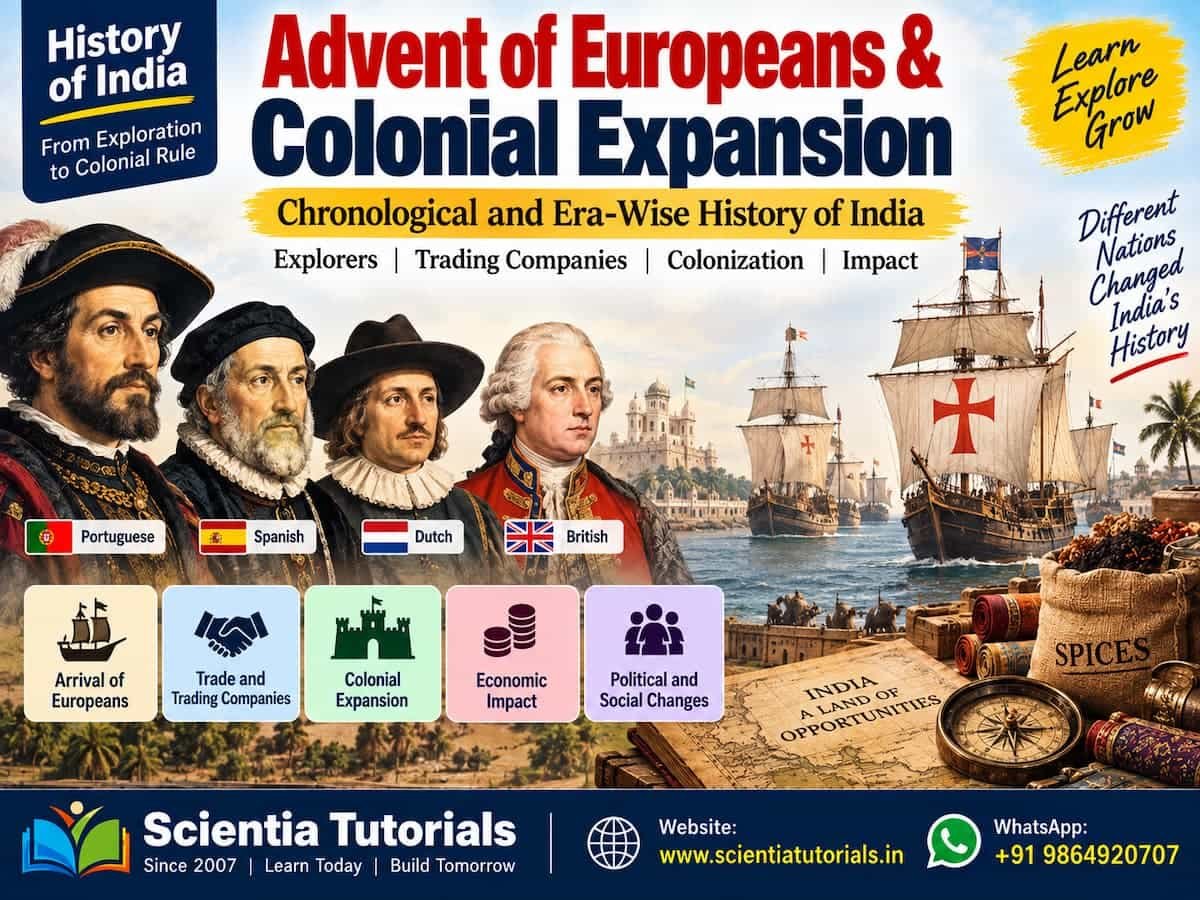
Advent of Europeans & Colonial Expansion – Chronological and Era-Wise History of India – MCQs is an exam-oriented course covering the arrival of European powers in India and the gradual expansion of European commercial and political influence. It explores the Portuguese, Dutch, English, French, and other European trading powers, their trading settlements, commercial activities, rivalries, and the major events that contributed to the rise of British political dominance in India.
The course presents chronological and era-wise MCQs with answers and clear explanations, helping learners understand the key stages of European expansion and revise important historical facts for UPSC, APSC, SSC, Banking, State PSC, and other competitive examinations.
Curriculum
- 6 Sections
- 30 Lessons
- Lifetime
- Module 1: Pre-European Trade Contacts and the Indian Ocean World Time Period: c. 1000 CE – 1498 CEKey Features India’s role in the Indian Ocean trade network Arab, Persian, and Asian merchants in Indian ports Coastal trading centres and commercial prosperity Indigenous banking, credit, and merchant communities Political fragmentation and trade-friendly regional states5
- Module 2: Portuguese Arrival and Early European Settlements Time Period: c. 1498 CE – 1600 CEKey Features Vasco da Gama and the sea route to India Portuguese maritime supremacy and naval warfare Establishment of trading posts and forts Cartaz system and monopoly over spice trade Cultural and religious interactions with Indian society5
- Module 3: Dutch, English, and French Trading Companies in India Time Period: c. 1600 CE – 1700 CEKey Features Rise of joint-stock companies Dutch, English, and French commercial strategies Factory system and inland trade expansion Competition among European powers Changing nature of Indo-European trade relations5
- Module 4: Anglo-French Rivalry and the Rise of Company Power Time Period: c. 1700 CE – 1765 CEKey Features Decline of Mughal authority Military technology and European warfare Carnatic Wars and Anglo-French conflicts Company alliances with Indian rulers Transition from trade to territorial control5
- Module 5: Transition from Trade to Colonial Rule Time Period: c. 1765 CE – 1857 CEKey Features Grant of Diwani and revenue control Expansion of British territorial rule Administrative and economic restructuring Commercialisation and drain of wealth Social and political consequences of colonial expansion5
- Module 6: Advent of Europeans and the Making of Colonial India – A Historical Assessment Time Period: c. 1498 CE – 1857 CEKey Features Long-term impact of European intervention Transformation of Indian economy and polity Cultural encounters and social change Foundations of modern colonial India Historical interpretations and debates5
Course Features
- Lectures 30
- Quiz 0
- Duration Lifetime access
- Skill level All levels
- Language English
- Students 0
- Assessments Yes