
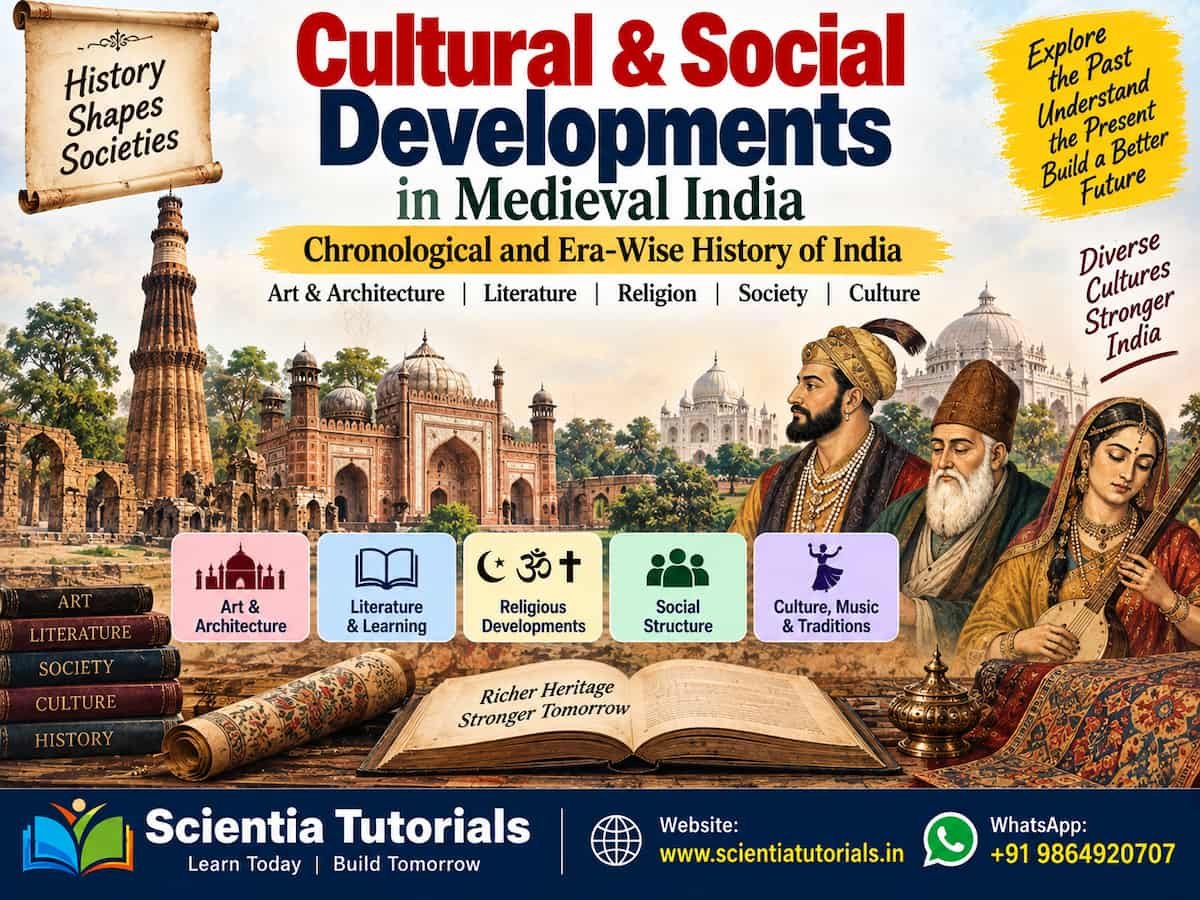
Cultural & Social Developments in Medieval India – Chronological and Era-Wise History of India – MCQs
Course Overview Cultural & Social Developments in Medieval India – Chronological and Era-Wise History of India – MCQs is an exam-oriented course covering the major cultural, social, religious, literary, artistic, and architectural developments of medieval India. It explores the Bhakti and Sufi traditions, regional languages and literature, education, music, painting, …

Overview
Course Overview
Cultural & Social Developments in Medieval India – Chronological and Era-Wise History of India – MCQs is an exam-oriented course covering the major cultural, social, religious, literary, artistic, and architectural developments of medieval India. It explores the Bhakti and Sufi traditions, regional languages and literature, education, music, painting, architecture, religious practices, social structures, and cultural interactions that shaped medieval Indian society.
The course presents chronological and era-wise MCQs with answers and clear explanations, helping learners understand key administrative changes and revise important facts for CUET-UG / CUET-PG, UPSC Civil Services Examination (CSE), SSC CGL, SSC CHSL, IBPS PO, SBI PO, RRB NTPC, RRB Group D, CDS, NDA & NA, CAPF, APSC CCE, All State Government Exams, Assam Government Grade III & IV, Assam Police Recruitment, CTET, UGC NET examinations.
Curriculum
- 6 Sections
- 30 Lessons
- Lifetime
- Section 1: Early Medieval India – Foundations of Cultural & Social Transformation Time Period: c. 600 CE – 1200 CEKey Cultural & Social Features Transition from ancient to medieval social structures Expansion of agrarian society and village communities Growth of temple culture and Brahmanical institutions Rise of regional languages and devotional practices Early Bhakti traditions and social integration5
- 1.1Social Structure in Early Medieval India: History MCQs
- 1.2Early Medieval India Caste System and Land Grants: History MCQs
- 1.3Rise of Temple Culture in Early Medieval India: MCQs
- 1.4Early Bhakti Traditions in India: History MCQs for Exams
- 1.5Regional Languages and Literature in Early Medieval India MCQs
- Section 2: Cultural & Social Life under the Delhi Sultanate Time Period: c. 1206 CE – 1526 CEKey Cultural & Social Features Indo-Islamic cultural interaction Urbanisation and emergence of new social elites Sufi influence and spiritual pluralism Persian literary traditions and education Changing status of women and social customs5
- 2.1Social Structure of Delhi Sultanate India: History MCQs
- 2.2Indo-Islamic Cultural Synthesis in Medieval India: MCQs
- 2.3Sufism and Its Social Impact in Medieval India: History MCQs
- 2.4Art, Architecture and Urban Culture of Delhi Sultanate: MCQs
- 2.5Language, Education and Persian Culture: Delhi Sultanate MCQs
- Section 3: Regional Kingdoms and Local Cultural Traditions Time Period: c. 800 CE – 1500 CEKey Cultural & Social Features Flourishing regional cultures and identities Courtly traditions and patronage of arts Regional Bhakti movements and saints Vernacular literature and folk traditions Local social structures and community life5
- 3.1Cultural Life under South and Western Indian Kingdoms: MCQs
- 3.2Regional Bhakti Movements and Social Reform: Medieval India MCQs
- 3.3Vernacular Literature and Folk Cultural Traditions: Medieval MCQs
- 3.4Temple Architecture and Regional Art Schools: Medieval India MCQs
- 3.5Society, Women and Community Life in Regional Medieval India MCQs
- Section 4: Mughal Era – Cultural Synthesis and Social Organisation Time Period: c. 1526 CE – 1707 CEKey Cultural & Social Features Imperial patronage of art and culture Composite Mughal culture Social hierarchy and mansabdari system Mughal architecture, painting, and music Status of women and family life5
- Section 5: Bhakti and Sufi Movements – Social and Cultural Renaissance Time Period: c. 13th Century CE – 17th Century CEKey Cultural & Social Features Spiritual egalitarianism and social harmony Opposition to caste rigidities and ritualism Popularisation of devotional worship Use of vernacular languages Influence on art, music, and poetry5
- 5.1Origins of Bhakti Movement: Philosophy, Saints and Ideas MCQs
- 5.2Major Bhakti Saints and Social Messages: MCQs with Answers
- 5.3Sufi Orders in Medieval India: Chishti, Suhrawardi & Naqshbandi
- 5.4Bhakti-Sufi Cultural Interaction: Harmony and Shared Traditions MCQs
- 5.5Social Impact of Bhakti and Sufi Movements: MCQs
- Section 6: Late Medieval India – Society on the Eve of Modern Transition Time Period: c. 1707 CE – 1750 CEKey Cultural & Social Features Decline of Mughal central authority Regional cultural continuity and change Persistence of traditional social institutions Early encounters with European cultural influences Transition towards early modern Indian society5
Course Features
- Lectures 30
- Quiz 0
- Duration Lifetime access
- Skill level All levels
- Language English
- Students 0
- Assessments Yes