
Mahajanapadas & Rise of New Religious Movements – Chronological and Era-Wise History of India
Mahajanapadas & Rise of New Religious Movements – Chronological and Era-Wise History of India In this Course, each Lesson under the Modules is divided into 4 Sections, as mentioned below: Study Module with Revision Notes, Questions with Answers, MCQs with …

Overview
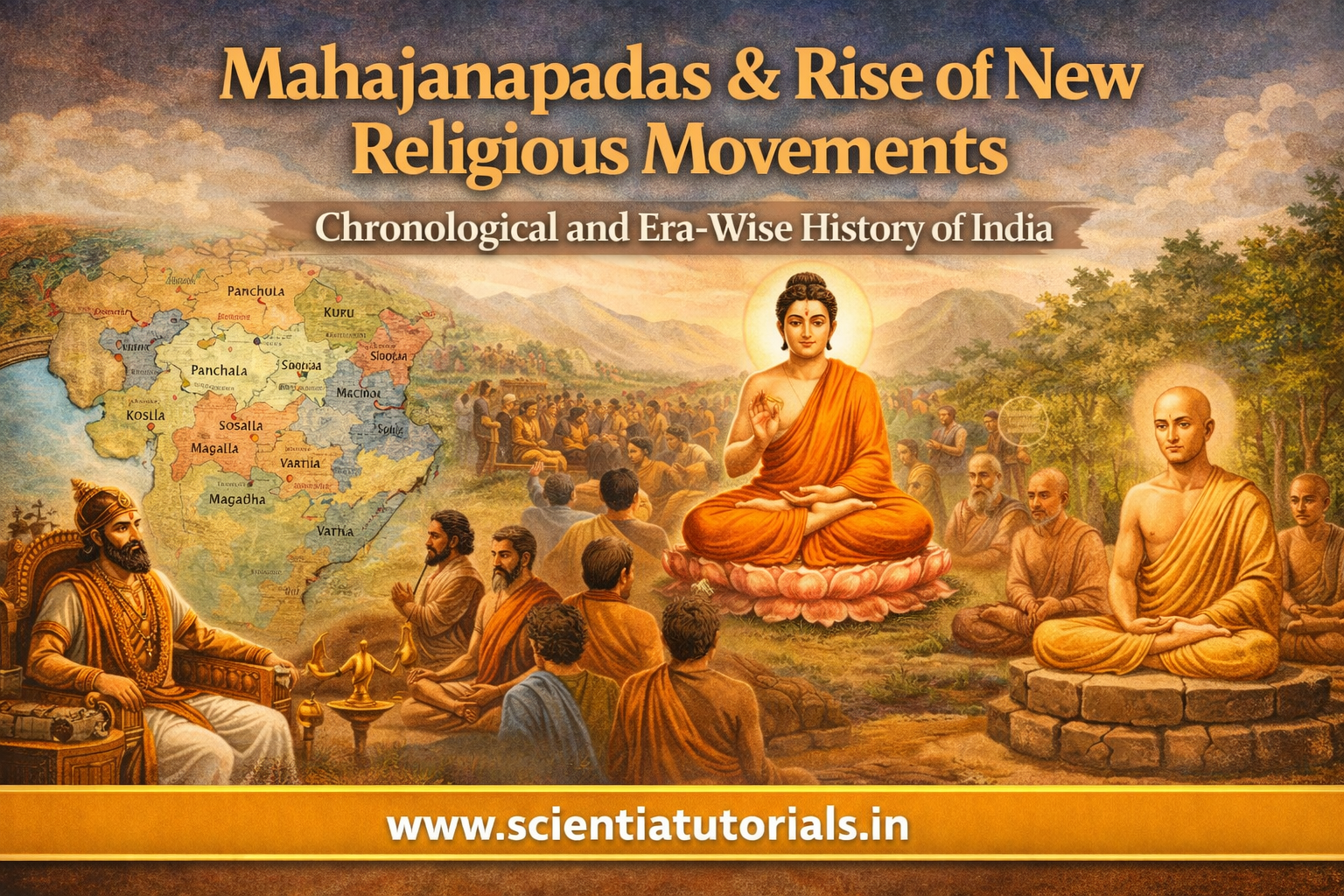
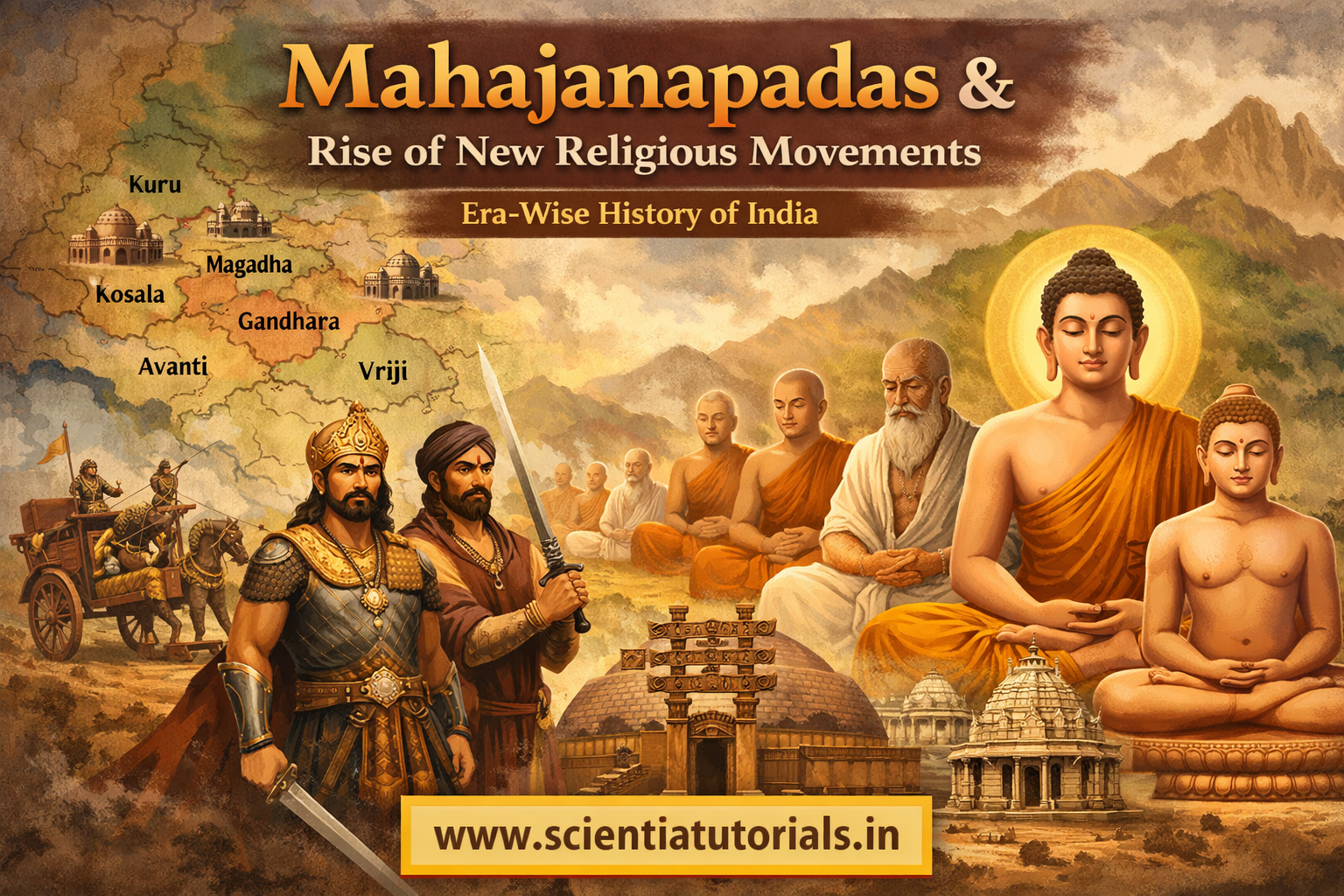
Mahajanapadas & Rise of New Religious Movements – Chronological and Era-Wise History of India
In this Course, each Lesson under the Modules is divided into 4 Sections, as mentioned below:
- Study Module with Revision Notes,
- Questions with Answers,
- MCQs with Answers and detailed explanations.
Module-wise Breakdown of Lessons for Online Learning
This online learning course offers a comprehensive, chronological, and evidence-based understanding of the History of India, with special focus on controversial events, debates, and critical interpretations. Designed for both conceptual clarity and exam readiness, the course strengthens analytical thinking, source evaluation, and answer-writing skills required in competitive examinations.
The content is highly relevant for aspirants preparing for UPSC (CSE), State PSCs (APSC, UPPSC, BPSC, MPPSC, MPSC, WBCS, RPSC, TNPSC, etc.), UGC-NET/JRF, CUET (UG/PG), SSC, NDA, CDS, CAPF, as well as CBSE, ICSE, State Board examinations, and college/university undergraduate and postgraduate courses where History of India is a core subject.
Module 1: Transition from Later Vedic Age to Early Historic India
Timeline: c. 1000 BCE – 600 BCE
Overview
This module explains the transformation of Indian society from the Later Vedic tribal-pastoral framework to the Early Historic phase marked by territorial states, urbanisation, and social change.
Key Characteristics
-
Decline of tribal polity and rise of territorial control
-
Agricultural expansion and use of iron
-
Growing social stratification and ritual complexity
Lessons
-
Later Vedic Background and Seeds of Early Historic India
-
Economic Changes: Agriculture, Iron Technology, and Surplus
-
Social Transformation and Challenges to Vedic Ritualism
Module 2: Early Historic Transition Phase
Timeline: c. 600 BCE
Overview
This module introduces the Early Historic Transition Phase, highlighting urban growth, trade networks, and the emergence of political authority beyond kinship ties.
Key Characteristics
-
Emergence of towns and trade routes
-
Introduction of coinage
-
Rise of new social groups such as merchants and artisans
Lessons
-
Urbanisation in Early Historic India
-
Trade, Commerce, and the Use of Coins
-
Changing Social Order and Economic Classes
Module 3: Age of Mahajanapadas
Timeline: c. 600 BCE – 321 BCE
Overview
This module focuses on the formation of the Sixteen Mahajanapadas, representing the first large territorial states in Ancient Indian political history.
Key Characteristics
-
Formation of monarchies and republics
-
Standing armies and taxation systems
-
Inter-state conflicts and expansion
Lessons
-
Concept and Definition of Mahajanapadas
-
The Sixteen Mahajanapadas: Geographical Spread and Features
-
Major Mahajanapadas: Magadha, Kosala, Avanti, Vatsa, and Vrijji
Module 4: Political Institutions – Monarchies and Ganasanghas
Timeline: c. 600 BCE – 400 BCE
Overview
This module analyses the political structures of monarchies and Ganasanghas (republics), highlighting diversity in governance during the Early Historic Period.
Key Characteristics
-
Hereditary kingship in monarchies
-
Collective governance in republics
-
Role of assemblies and councils
Lessons
-
Monarchical States: Administration and Kingship
-
Ganasanghas (Republics): Structure and Functioning
-
Comparison between Monarchies and Republican States
Module 5: Rise of Magadha and Causes of Its Supremacy
Timeline: c. 600 BCE – 321 BCE
Overview
This module explains why Magadha emerged as the most powerful Mahajanapada, laying the foundation for future empires.
Key Characteristics
-
Strategic geographical location
-
Control over iron resources
-
Strong rulers and administrative efficiency
Lessons
-
Geographical Advantages of Magadha
-
Economic and Military Strength of Magadha
-
Role of Leadership and Administration in Magadhan Expansion
Module 6: Shramana Tradition and Rise of New Religious Movements
Timeline: c. 7th–6th century BCE
Overview
This module examines the Shramana tradition as a response to rigid Vedic ritualism, leading to the rise of new ethical and philosophical ideas.
Key Characteristics
-
Opposition to ritual dominance
-
Emphasis on asceticism and ethical conduct
-
Search for liberation through self-discipline
Lessons
-
Meaning and Features of the Shramana Tradition
-
Causes for the Rise of New Religious Movements
-
Social and Religious Background of Reform Movements
Module 7: Buddhism – Life and Teachings of Gautama Buddha
Timeline: c. 563 BCE – 483 BCE
Overview
This module explores the life of Gautama Buddha and the core philosophical principles of Buddhism.
Key Characteristics
-
Middle Path between luxury and asceticism
-
Ethical living and mental discipline
-
Universal appeal beyond caste barriers
Lessons
-
Life of Gautama Buddha: From Prince to Enlightened Teacher
-
Four Noble Truths and Eightfold Path
-
Concept of Nirvana and Role of the Sangha
Module 8: Jainism – Life and Teachings of Mahavira
Timeline: c. 599 BCE – 527 BCE
Overview
This module studies the Jain religious movement and the ethical teachings of Mahavira.
Key Characteristics
-
Strict asceticism and moral discipline
-
Centrality of non-violence (Ahimsa)
-
Emphasis on self-control and renunciation
Lessons
-
Life of Mahavira and Jain Tradition
-
Core Doctrines: Ahimsa, Aparigraha, and Anekantavada
-
Jain Monastic Order and Ethical Code
Module 9: Core Doctrines of Buddhism and Jainism – A Comparative Study
Timeline: 6th century BCE onwards
Overview
This module provides a comparative understanding of Buddhism and Jainism as influential Indian religious reform movements.
Key Characteristics
-
Ethical universalism
-
Rejection of excessive ritualism
-
Influence on society and culture
Lessons
-
Philosophical Foundations of Buddhism
-
Philosophical Foundations of Jainism
-
Comparative Analysis: Buddhism vs Jainism
Module 10: Impact and Historical Significance of New Religious Movements
Timeline: c. 6th century BCE onwards
Overview
This module evaluates the long-term impact of Buddhism and Jainism on Indian society, polity, and culture.
Key Characteristics
-
Decline of ritualistic dominance
-
Promotion of ethical and moral values
-
Influence on later Indian religious traditions
Lessons
-
Social and Religious Impact of Buddhism and Jainism
-
Contribution to Indian Philosophy and Culture
-
Legacy of New Religious Movements in Indian History
✅ Course Outcome
By completing this course, learners will develop chronological clarity, conceptual depth, and exam-oriented understanding of the Mahajanapadas and the rise of new religious movements—crucial for school education, undergraduate studies, and competitive examinations.
Curriculum
You May Like
Gupta Age & Post-Gupta Developments – Chronological and Era-Wise History of India
Gupta Age & Post-Gupta Developments – Chronological and Era-Wise History of India In this Course, each Lesson under the Modules is divided into 4 Sections,...
Mauryan Empire & Post-Mauryan India – Chronological and Era-Wise History of India
Mauryan Empire & Post-Mauryan India – Chronological and Era-Wise History of India In this Course, each Lesson under the Modules is divided into 4 Sections,...
Course Features
- Lectures 30
- Quiz 0
- Duration Lifetime access
- Skill level All levels
- Language English
- Students 0
- Assessments Yes