
Mughal Empire in India – Chronological and Era-Wise History of India – MCQs
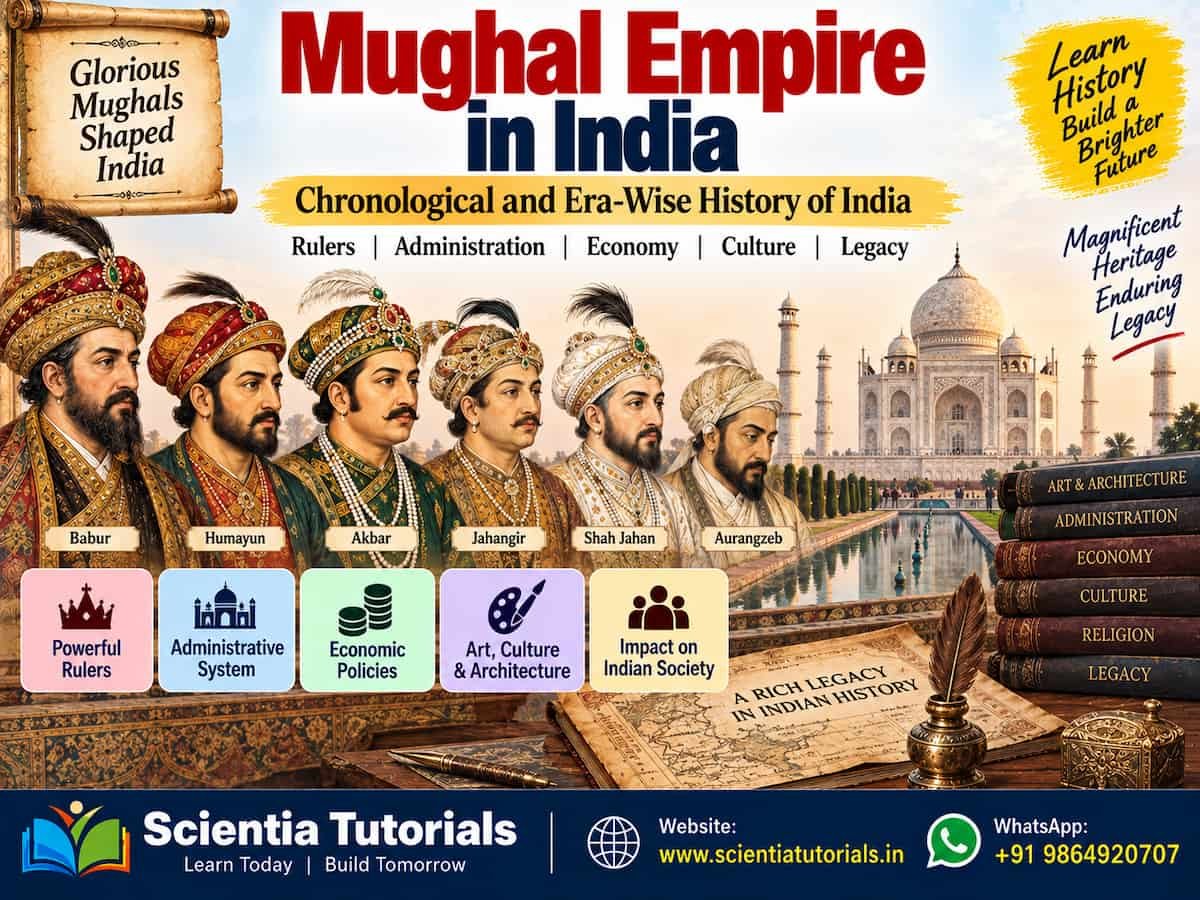
Course Overview Mughal Empire in India – Chronological and Era-Wise History of India – MCQs is an exam-oriented course covering the major political, administrative, economic, social, religious, and cultural developments of the Mughal Empire. The course follows a chronological and era-wise approach, covering important rulers, battles, administration, expansion, art and …

Overview
Course Overview
Mughal Empire in India – Chronological and Era-Wise History of India – MCQs is an exam-oriented course covering the major political, administrative, economic, social, religious, and cultural developments of the Mughal Empire. The course follows a chronological and era-wise approach, covering important rulers, battles, administration, expansion, art and architecture, literature, and the factors associated with the decline of Mughal power.
The course includes MCQs with answers and clear explanations to support quick revision, concept building, and competitive-exam preparation.
Targeting Exams in India
This course is useful for preparation for:
- UPSC Civil Services Examination
- APSC & State PSC Examinations
- SSC Examinations
- Railway Recruitment Examinations
- Banking Examinations
- Teaching & TET Examinations
- Defence & Other Competitive Examinations
Curriculum
- 8 Sections
- 32 Lessons
- Lifetime
- Section 1: Foundation of the Mughal Empire (c. 1526 CE – 1530 CE)Key Characteristics Political: Establishment of Mughal rule after the First Battle of Panipat; end of Delhi Sultanate dominance Administrative: Introduction of Central Asian military traditions Economic: Control over fertile Indo-Gangetic plains Social & Religious: Interaction between Turko-Mongol elites and Indian society Cultural: Beginning of Persian cultural influence in India4
- Section 2: Babur and Humayun Period (c. 1526 CE – 1556 CE)Key Characteristics Political: Struggle for consolidation; Afghan resistance Administrative: Experimental governance and jagir assignments Economic: Revenue extraction from newly conquered territories Social & Religious: Limited religious interference Cultural: Baburnama and early Mughal art4
- Section 3: Akbar’s Expansion and Consolidation (c. 1556 CE – 1605 CE)Key Characteristics Political: Territorial expansion and political unification Administrative: Mansabdari system and centralized governance Economic: Todar Mal’s revenue reforms Social & Religious: Sulh-i-Kul (religious tolerance) Cultural: Mughal architecture, court culture, and literature4
- Section 4: Jahangir’s Administration and Culture (c. 1605 CE – 1627 CE)Key Characteristics Political: Stability with growing influence of nobles Administrative: Justice-oriented governance Economic: Expansion of foreign trade Social & Religious: Continued policy of tolerance Cultural: Development of Mughal painting4
- Section 5: Shah Jahan’s Golden Age (c. 1628 CE – 1658 CE)Key Characteristics Political: Peak of Mughal territorial and administrative power Administrative: Highly centralized bureaucracy Economic: Prosperity through trade and taxation Social & Religious: Patronage of Islamic culture Cultural: Golden age of Mughal architecture4
- Section 6: Aurangzeb and Imperial Overstretch (c. 1658 CE – 1707 CE)Key Characteristics Political: Continuous wars and territorial overexpansion Administrative: Increased central control and military expenditure Economic: Strain on treasury Social & Religious: Orthodox religious policies Cultural: Decline of royal patronage4
- Section 7: Later Mughals and Decline (c. 1707 CE – 1857 CE)Key Characteristics Political: Weak successors and regional autonomy Administrative: Collapse of centralized authority Economic: Decline of imperial revenue Social & Religious: Fragmentation of Mughal society Cultural: Survival of Mughal traditions without power4
- Section 8: Transition from Mughal to British Rule (c. 1757 CE – 1858 CE)Key Characteristics Political: British dominance under nominal Mughal authority Administrative: East India Company control Economic: Colonial exploitation Social & Religious: Resistance and reform movements Cultural: End of Indo-Persian court culture4
Course Features
- Lectures 32
- Quiz 0
- Duration Lifetime access
- Skill level All levels
- Language English
- Students 0
- Assessments Yes