Assam Geography MCQs with Answers and Explanations for APSC, ADRE, Assam Police & Competitive Exams
Assam Geography MCQs with Answers and Explanations
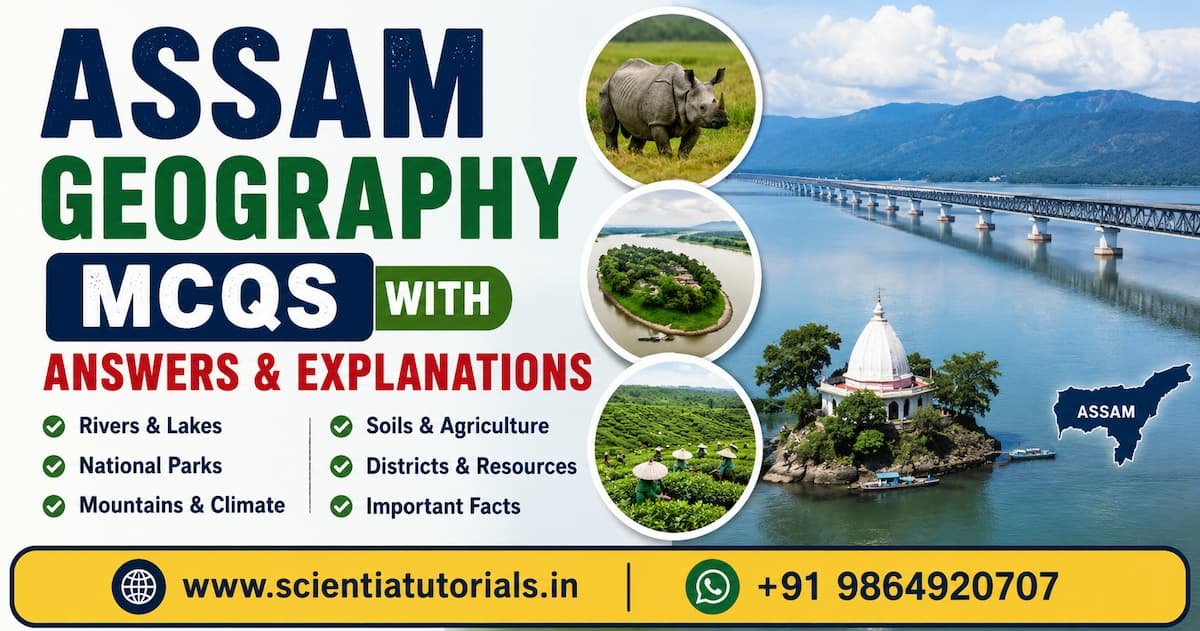
These 30 carefully designed MCQs cover important topics of Assam Geography including rivers, mountains, climate, national parks, wetlands, soils, agriculture, transportation, and natural resources. They are highly useful for APSC, ADRE, Assam Police, Assam TET, Grade III & Grade IV, SSC, Railway, Banking, and other competitive examinations.
1. Which river is known as the lifeline of Assam?
A. Barak
B. Subansiri
C. Brahmaputra ✅
D. Manas
Answer: C. Brahmaputra
Explanation:
The Brahmaputra River is the most important river of Assam. It enters Assam near Sadiya and flows westward through the state before entering Bangladesh. It supports agriculture, transportation, fisheries, and provides fertile alluvial soil to the Assam Valley. Hence, it is often called the “Lifeline of Assam.”
2. The Brahmaputra enters Assam through which district?
A. Dibrugarh
B. Tinsukia
C. Dhemaji ✅
D. Sonitpur
Answer: C. Dhemaji
Explanation:
The Brahmaputra enters Assam near Sadiya in the present-day Dhemaji district after flowing from Tibet and Arunachal Pradesh. It is known as Tsangpo in Tibet and Siang/Dihang in Arunachal Pradesh.
3. Which is the largest river island in Assam?
A. Umananda
B. Majuli ✅
C. Dibru Island
D. Bogibeel Island
Answer: B. Majuli
Explanation:
Majuli, located in the Brahmaputra River, is the world’s largest inhabited river island. It is famous for Vaishnavite culture, Satras, and rich biodiversity.
4. Which is the smallest inhabited river island in the world located in Assam?
A. Majuli
B. Peacock Island (Umananda) ✅
C. Dibru Island
D. Bhairab Island
Answer: B. Peacock Island (Umananda)
Explanation:
Umananda Island, situated in the Brahmaputra River at Guwahati, is recognized as the world’s smallest inhabited river island. It houses the famous Umananda Temple.
5. Which district is known as the “Tea City of Assam”?
A. Jorhat
B. Dibrugarh ✅
C. Sivasagar
D. Tinsukia
Answer: B. Dibrugarh
Explanation:
Dibrugarh is called the “Tea City of Assam” because of its extensive tea gardens and significant contribution to India’s tea industry.
6. Which is the highest peak in Assam?
A. Nilachal Hill
B. Chandubi Hill
C. Laike Peak
D. Singhason Peak ✅
Answer: D. Singhason Peak
Explanation:
Singhason Peak, located in the Karbi Anglong district, is the highest peak in Assam with an elevation of approximately 1,360 meters above sea level.
7. Which National Park of Assam is famous for the One-Horned Rhinoceros?
A. Manas National Park
B. Nameri National Park
C. Kaziranga National Park ✅
D. Orang National Park
Answer: C. Kaziranga National Park
Explanation:
Kaziranga National Park is a UNESCO World Heritage Site and is globally famous for conserving the Great Indian One-Horned Rhinoceros.
8. Kaziranga National Park is situated on the banks of which river?
A. Barak
B. Dhansiri
C. Brahmaputra ✅
D. Kopili
Answer: C. Brahmaputra
Explanation:
Kaziranga National Park lies on the southern bank of the Brahmaputra River. The river’s annual floods help maintain the park’s grassland ecosystem.
9. Which National Park of Assam is also a UNESCO World Heritage Site?
A. Dibru-Saikhowa
B. Nameri
C. Orang
D. Manas National Park ✅
Answer: D. Manas National Park
Explanation:
Manas National Park is recognized as a UNESCO World Heritage Site, Project Tiger Reserve, Biosphere Reserve, and Elephant Reserve.
10. Which district of Assam is famous for petroleum production?
A. Hailakandi
B. Nalbari
C. Tinsukia ✅
D. Goalpara
Answer: C. Tinsukia
Explanation:
Digboi in Tinsukia district is famous for having Asia’s oldest operating oil refinery and significant petroleum reserves.
11. Which place is known as the “Oil City of Assam”?
A. Duliajan
B. Digboi ✅
C. Sivasagar
D. Moran
Answer: B. Digboi
Explanation:
Digboi is popularly known as the “Oil City of Assam” because crude oil was discovered here in the 19th century.
12. The Barak Valley consists of how many districts?
A. 2
B. 3 ✅
C. 4
D. 5
Answer: B. 3
Explanation:
The Barak Valley consists of:
- Cachar
- Karimganj
- Hailakandi
The valley is named after the Barak River.
13. Which river divides Assam into North and South Assam?
A. Manas
B. Barak
C. Dhansiri
D. Brahmaputra ✅
Answer: D. Brahmaputra
Explanation:
The Brahmaputra River flows through the middle of Assam and divides the state into North Assam and South Assam.
14. Which soil type is most common in Assam?
A. Black Soil
B. Laterite Soil
C. Alluvial Soil ✅
D. Desert Soil
Answer: C. Alluvial Soil
Explanation:
Alluvial soil deposited by the Brahmaputra and Barak rivers is the most widespread soil type in Assam and is highly fertile for agriculture.
15. Which crop is the principal food crop of Assam?
A. Wheat
B. Rice ✅
C. Maize
D. Barley
Answer: B. Rice
Explanation:
Rice is the staple food and the principal agricultural crop of Assam. Various types such as Ahu, Sali, and Boro rice are cultivated.
16. Which district is famous for bell-metal industry?
A. Sivasagar
B. Jorhat
C. Morigaon
D. Bajali (Sarthebari area) ✅
Answer: D. Bajali (Sarthebari area)
Explanation:
Sarthebari is famous for its traditional bell-metal handicrafts and is often called the “Bell Metal Industry Hub of Assam.”
17. Which is the largest wetland (beel) in Assam?
A. Deepor Beel
B. Son Beel ✅
C. Chandubi Lake
D. Urpad Beel
Answer: B. Son Beel
Explanation:
Son Beel, located in Karimganj district, is the largest wetland in Assam and one of the largest wetlands in Northeast India.
18. Deepor Beel is located near which city?
A. Tezpur
B. Jorhat
C. Guwahati ✅
D. Silchar
Answer: C. Guwahati
Explanation:
Deepor Beel is a Ramsar Site situated on the southwestern edge of Guwahati and is important for migratory birds.
19. Which mountain range forms the southern boundary of Assam?
A. Himalayas
B. Karakoram
C. Patkai Hills
D. Meghalaya Plateau ✅
Answer: D. Meghalaya Plateau
Explanation:
The Meghalaya Plateau forms much of the southern boundary of the Brahmaputra Valley and influences Assam’s climate.
20. Which river is the largest tributary of the Brahmaputra in Assam?
A. Dhansiri
B. Kopili
C. Subansiri ✅
D. Beki
Answer: C. Subansiri
Explanation:
The Subansiri River originates in Tibet and Arunachal Pradesh and is the largest tributary of the Brahmaputra.
21. Assam experiences mainly which type of climate?
A. Desert Climate
B. Mediterranean Climate
C. Tropical Monsoon Climate ✅
D. Tundra Climate
Answer: C. Tropical Monsoon Climate
Explanation:
Assam receives heavy rainfall due to the southwest monsoon and therefore experiences a humid tropical monsoon climate.
22. Which district receives some of the highest rainfall in Assam?
A. Kamrup
B. Dibrugarh
C. Karbi Anglong
D. Hailakandi ✅
Answer: D. Hailakandi
Explanation:
Southern Assam, especially areas of Barak Valley including Hailakandi, receives very high annual rainfall due to monsoon winds.
23. Which National Park is known as the “Mini Kaziranga”?
A. Orang National Park ✅
B. Nameri National Park
C. Raimona National Park
D. Dibru-Saikhowa
Answer: A. Orang National Park
Explanation:
Orang National Park is called the “Mini Kaziranga” because it has a similar ecosystem and population of one-horned rhinoceroses.
24. Which district headquarters is known as the cultural capital of Assam?
A. Jorhat ✅
B. Barpeta
C. Tezpur
D. Nagaon
Answer: A. Jorhat
Explanation:
Jorhat is considered the cultural capital of Assam because of its literary, educational, and cultural heritage.
25. Which is the longest bridge in Assam?
A. Saraighat Bridge
B. Kalia Bhomora Bridge
C. Bogibeel Bridge ✅
D. Naranarayan Setu
Answer: C. Bogibeel Bridge
Explanation:
Bogibeel Bridge, connecting Dibrugarh and Dhemaji, is India’s longest rail-cum-road bridge.
26. Which wildlife sanctuary is famous for the Golden Langur?
A. Pobitora
B. Chakrashila Wildlife Sanctuary ✅
C. Nambor
D. Bherjan-Borajan
Answer: B. Chakrashila Wildlife Sanctuary
Explanation:
Chakrashila Wildlife Sanctuary is renowned for conserving the endangered Golden Langur.
27. Which city is known as the “Gateway to Northeast India”?
A. Silchar
B. Tezpur
C. Guwahati ✅
D. Jorhat
Answer: C. Guwahati
Explanation:
Guwahati is the largest city in Northeast India and serves as the major transportation, commercial, and educational hub.
28. Which river forms the southern valley of Assam?
A. Brahmaputra
B. Barak ✅
C. Beki
D. Jia Bharali
Answer: B. Barak
Explanation:
The Barak River is the principal river of the Barak Valley region of southern Assam.
29. Which district is home to Raimona National Park?
A. Kokrajhar ✅
B. Chirang
C. Udalguri
D. Baksa
Answer: A. Kokrajhar
Explanation:
Raimona National Park, declared in 2021, is located in Kokrajhar district and forms part of a transboundary conservation landscape.
30. Which of the following is the state animal of Assam?
A. One-Horned Rhinoceros ✅
B. Royal Bengal Tiger
C. Asian Elephant
D. Golden Langur
Answer: A. One-Horned Rhinoceros
Explanation:
The Great Indian One-Horned Rhinoceros is the official state animal of Assam and symbolizes the state’s rich wildlife heritage.
Quick Revision Facts
✔ Lifeline of Assam – Brahmaputra River
✔ Largest River Island – Majuli
✔ Smallest Inhabited River Island – Umananda
✔ Tea City of Assam – Dibrugarh
✔ Oil City of Assam – Digboi
✔ Largest Wetland – Son Beel
✔ UNESCO Sites – Kaziranga & Manas National Parks
✔ Highest Peak – Singhason Peak
✔ Gateway to Northeast India – Guwahati
✔ State Animal – One-Horned Rhinoceros
✔ Principal Crop – Rice
✔ Largest Tributary of Brahmaputra – Subansiri River
These MCQs are designed in the latest competitive examination pattern and focus on factual accuracy, conceptual understanding, and exam-oriented preparation.