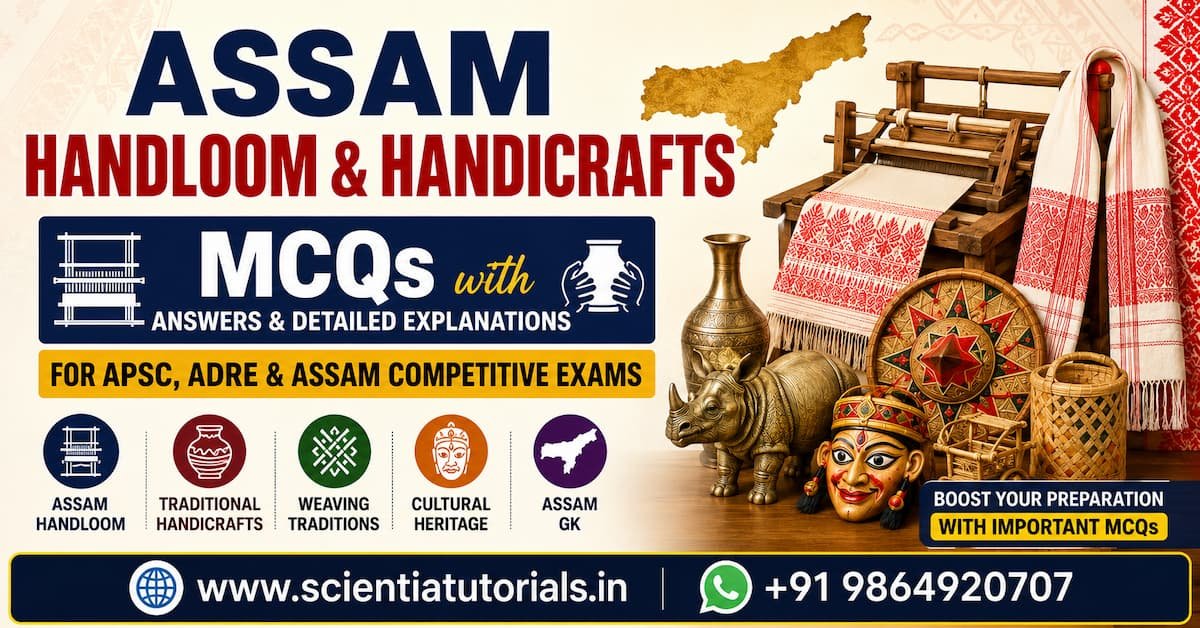
Assam Handloom and Handicrafts MCQs with Answers & Detailed Explanations for APSC, ADRE & Assam Competitive Exams
Assam Handloom and Handicrafts MCQs (1–30)
With Answers & Detailed Concept-Clearing Explanations
Useful for: APSC, ADRE, Assam Police, Assam TET, Grade III & Grade IV, SSC, Railway, Banking, and Other Competitive Examinations
1. Assam is popularly known as the land of which traditional textile?
A. Banarasi Silk
B. Muga Silk
C. Chanderi Silk
D. Pochampally Silk
✅ Correct Answer: B. Muga Silk
Explanation:
Assam is world-famous for Muga Silk, a golden-colored silk produced by the silkworm Antheraea assamensis, which is native to Assam. It is known for its natural golden sheen, durability, and exclusivity.
- A. Banarasi Silk – Produced mainly in Uttar Pradesh.
- B. Muga Silk – Correct; exclusive to Assam.
- C. Chanderi Silk – Produced in Madhya Pradesh.
- D. Pochampally Silk – Produced in Telangana.
2. Which silk variety of Assam is known as the “Golden Silk”?
A. Eri Silk
B. Muga Silk
C. Mulberry Silk
D. Tasar Silk
✅ Correct Answer: B. Muga Silk
Explanation:
Muga Silk is called the Golden Silk of Assam because of its natural golden-yellow lustre. It becomes shinier with age and is highly valued worldwide.
3. Which silk of Assam is popularly known as “Ahimsa Silk”?
A. Muga Silk
B. Eri Silk
C. Mulberry Silk
D. Tasar Silk
✅ Correct Answer: B. Eri Silk
Explanation:
Eri Silk is called Ahimsa Silk because the silk is extracted without killing the silkworm. It is soft, warm, and eco-friendly.
4. Which traditional Assamese garment is mainly woven using Muga Silk?
A. Mekhela Chador
B. Dhoti
C. Lungi
D. Saree from Kanchipuram
✅ Correct Answer: A. Mekhela Chador
Explanation:
The Mekhela Chador is the traditional attire of Assamese women and is commonly woven using Muga, Eri, or Pat silk.
5. The traditional Assamese handloom industry is mainly associated with which occupation?
A. Mining
B. Weaving
C. Shipbuilding
D. Pottery Only
✅ Correct Answer: B. Weaving
Explanation:
Weaving is an integral part of Assamese culture. Almost every traditional Assamese household historically possessed a handloom.
6. Which community in Assam is especially famous for handloom weaving?
A. Bodo Community
B. Assamese Community
C. Mishing Community
D. All of the Above
✅ Correct Answer: D. All of the Above
Explanation:
The Assamese, Bodo, and Mishing communities all have rich weaving traditions with unique designs, motifs, and textiles.
7. Which district is widely recognized as a major centre of Muga Silk production?
A. Sivasagar
B. Goalpara
C. Hailakandi
D. Dima Hasao
✅ Correct Answer: A. Sivasagar
Explanation:
Sivasagar, Jorhat, and nearby districts are important centres of Muga silk cultivation and weaving.
8. The silkworm producing Muga Silk is scientifically known as:
A. Bombyx mori
B. Antheraea assamensis
C. Samia ricini
D. Antheraea mylitta
✅ Correct Answer: B. Antheraea assamensis
Explanation:
The Muga silkworm (Antheraea assamensis) is endemic to Assam and produces the famous golden silk.
9. Which silk is mainly produced from the silkworm Samia ricini?
A. Pat Silk
B. Eri Silk
C. Muga Silk
D. Tasar Silk
✅ Correct Answer: B. Eri Silk
Explanation:
Eri silk is produced from the Samia ricini silkworm and is widely used for shawls and winter garments.
10. Which silk variety is known for its soft texture and warmth?
A. Muga Silk
B. Eri Silk
C. Pat Silk
D. Cotton
✅ Correct Answer: B. Eri Silk
Explanation:
Eri Silk is warm, soft, and breathable, making it ideal for shawls, blankets, and winter clothing.
11. Which silk of Assam resembles Mulberry Silk in appearance?
A. Pat Silk
B. Muga Silk
C. Eri Silk
D. Tasar Silk
✅ Correct Answer: A. Pat Silk
Explanation:
Pat Silk is white, glossy, and smooth, closely resembling Mulberry Silk and is widely used in ceremonial attire.
12. Which traditional Assamese cloth is commonly offered as a mark of respect?
A. Gamusa (Gamosa)
B. Lungi
C. Shawl
D. Turban
✅ Correct Answer: A. Gamusa (Gamosa)
Explanation:
The Gamusa is an iconic symbol of Assamese identity, culture, and hospitality. It is presented during festivals and public ceremonies as a mark of honour.
13. The red border of the traditional Gamusa generally symbolizes:
A. Prosperity and Respect
B. Agriculture Only
C. Rainfall
D. Fishing
✅ Correct Answer: A. Prosperity and Respect
Explanation:
The distinctive red motifs and border of the Gamusa symbolize prosperity, dignity, and Assamese cultural heritage.
14. Which festival showcases Assamese handloom and traditional attire prominently?
A. Rongali Bihu
B. Holi
C. Pongal
D. Onam
✅ Correct Answer: A. Rongali Bihu
Explanation:
During Rongali Bihu, people wear traditional handwoven garments such as Mekhela Chador and Gamusa.
15. Which organization promotes handloom and handicrafts in Assam?
A. Directorate of Handloom & Textiles, Assam
B. Reserve Bank of India
C. Election Commission
D. UPSC
✅ Correct Answer: A. Directorate of Handloom & Textiles, Assam
Explanation:
The Directorate supports weavers through training, marketing assistance, design development, and welfare schemes.
16. Bamboo handicrafts are mainly made from:
A. Bamboo Culms
B. Cotton Plants
C. Banana Leaves
D. Rubber Trees
✅ Correct Answer: A. Bamboo Culms
Explanation:
Bamboo culms (stems) are used to make baskets, furniture, decorative items, and household products.
17. Cane handicrafts in Assam are primarily made using:
A. Cane (Rattan)
B. Coconut Wood
C. Teak Wood
D. Sandalwood
✅ Correct Answer: A. Cane (Rattan)
Explanation:
Cane or rattan is flexible and durable, making it suitable for furniture and handicrafts.
18. Which district is famous for Bell Metal craft?
A. Hajo
B. Haflong
C. Karimganj
D. Dibrugarh
✅ Correct Answer: A. Hajo
Explanation:
Hajo is renowned for its traditional Bell Metal industry producing utensils and religious items.
19. Sarthebari is famous for which traditional craft?
A. Bell Metal Craft
B. Stone Carving
C. Pottery
D. Leather Craft
✅ Correct Answer: A. Bell Metal Craft
Explanation:
Sarthebari in Barpeta district is internationally recognized for its Bell Metal products.
20. Which Assamese handicraft uses water hyacinth?
A. Eco-friendly Handicrafts
B. Bell Metal Utensils
C. Pottery
D. Stone Sculpture
✅ Correct Answer: A. Eco-friendly Handicrafts
Explanation:
Water hyacinth is processed into baskets, bags, mats, and decorative items, promoting sustainable livelihoods.
21. Which craft is associated with Majuli?
A. Mask Making (Mukha Shilpa)
B. Marble Sculpture
C. Glass Painting
D. Carpet Weaving
✅ Correct Answer: A. Mask Making (Mukha Shilpa)
Explanation:
Majuli is famous for traditional mask-making used in Satriya culture and Bhaona performances.
22. The masks of Majuli are primarily used during:
A. Bhaona Performances
B. Cricket Matches
C. Boat Racing
D. Weddings Only
✅ Correct Answer: A. Bhaona Performances
Explanation:
The masks represent mythological characters during Bhaona, a traditional Assamese theatrical performance.
23. Which material is commonly used in Assamese pottery?
A. Clay
B. Iron
C. Marble
D. Aluminium
✅ Correct Answer: A. Clay
Explanation:
Clay is the primary raw material used for making earthen pots, lamps, and utensils.
24. Which handicraft is environmentally sustainable?
A. Bamboo Craft
B. Plastic Craft
C. PVC Products
D. Synthetic Foam Craft
✅ Correct Answer: A. Bamboo Craft
Explanation:
Bamboo grows rapidly and is biodegradable, making it one of the most sustainable handicraft materials.
25. Assam handloom products are known mainly for:
A. Traditional Designs
B. Machine Embroidery Only
C. Synthetic Fibre Production
D. Chemical Processing
✅ Correct Answer: A. Traditional Designs
Explanation:
Traditional motifs inspired by nature, folklore, and Assamese culture distinguish Assam handloom products.
26. Which of the following is a Geographical Indication (GI) product of Assam?
A. Muga Silk
B. Plastic Basket
C. Nylon Fabric
D. Polyester Cloth
✅ Correct Answer: A. Muga Silk
Explanation:
Muga Silk has received the Geographical Indication (GI) tag, recognizing its unique origin and qualities.
27. The weaving tradition of Assam is mainly passed down through:
A. Family Generations
B. Military Schools
C. Universities Only
D. Industrial Factories
✅ Correct Answer: A. Family Generations
Explanation:
Weaving skills are traditionally taught within families, especially from mothers to daughters.
28. Which handloom product is commonly used during Assamese festivals?
A. Gamusa
B. Plastic Cloth
C. Nylon Sheet
D. Canvas
✅ Correct Answer: A. Gamusa
Explanation:
The Gamusa is indispensable during Bihu, religious ceremonies, and social occasions.
29. Assam’s handicraft sector contributes mainly to:
A. Rural Employment
B. Petroleum Refining
C. Space Research
D. Automobile Manufacturing
✅ Correct Answer: A. Rural Employment
Explanation:
The handloom and handicraft industries generate significant employment, particularly for rural artisans and women.
30. Why are Assam’s handloom and handicrafts important?
A. They preserve cultural heritage and generate employment.
B. They replace agriculture completely.
C. They are used only for exports.
D. They have no economic significance.
✅ Correct Answer: A. They preserve cultural heritage and generate employment.
Explanation:
Assam’s handloom and handicrafts are vital because they:
- Preserve the state’s rich cultural traditions and artistic heritage.
- Provide livelihoods to thousands of artisans and weavers.
- Promote women’s empowerment and rural entrepreneurship.
- Contribute to tourism and exports.
- Strengthen Assam’s identity through products such as Muga Silk, Eri Silk, Pat Silk, Gamusa, Bell Metal crafts, Bamboo & Cane crafts, and Majuli masks.
- A is correct: It captures both the cultural and economic importance.
- B is incorrect: Agriculture remains a major economic activity.
- C is incorrect: These products are used both domestically and internationally.
- D is incorrect: The sector plays a significant role in Assam’s economy and heritage.
Quick Revision
| Topic | Key Fact |
|---|---|
| Golden Silk | Muga Silk |
| Ahimsa Silk | Eri Silk |
| White Silk | Pat Silk |
| Traditional Dress | Mekhela Chador |
| Cultural Cloth | Gamusa (Gamosa) |
| Famous Craft Centre | Sarthebari (Bell Metal) |
| Famous Pilgrimage Craft Centre | Hajo (Bell Metal) |
| Famous Island Craft | Majuli Mask Making |
| Eco-Friendly Crafts | Bamboo & Cane |
| GI Product | Muga Silk |
| Major Festival | Rongali Bihu |
| Promoting Department | Directorate of Handloom & Textiles, Assam |
Exam Tip: For APSC, ADRE, Assam Police, Assam TET, Grade III & IV, and other Assam competitive exams, pay special attention to the three traditional silk varieties (Muga, Eri, and Pat), Gamusa, Mekhela Chador, Majuli masks, Bell Metal crafts of Sarthebari and Hajo, Bamboo & Cane handicrafts, and the GI tag for Muga Silk, as these are among the most frequently tested topics in Assam General Knowledge.