Classical Dances of India Questions and Answers
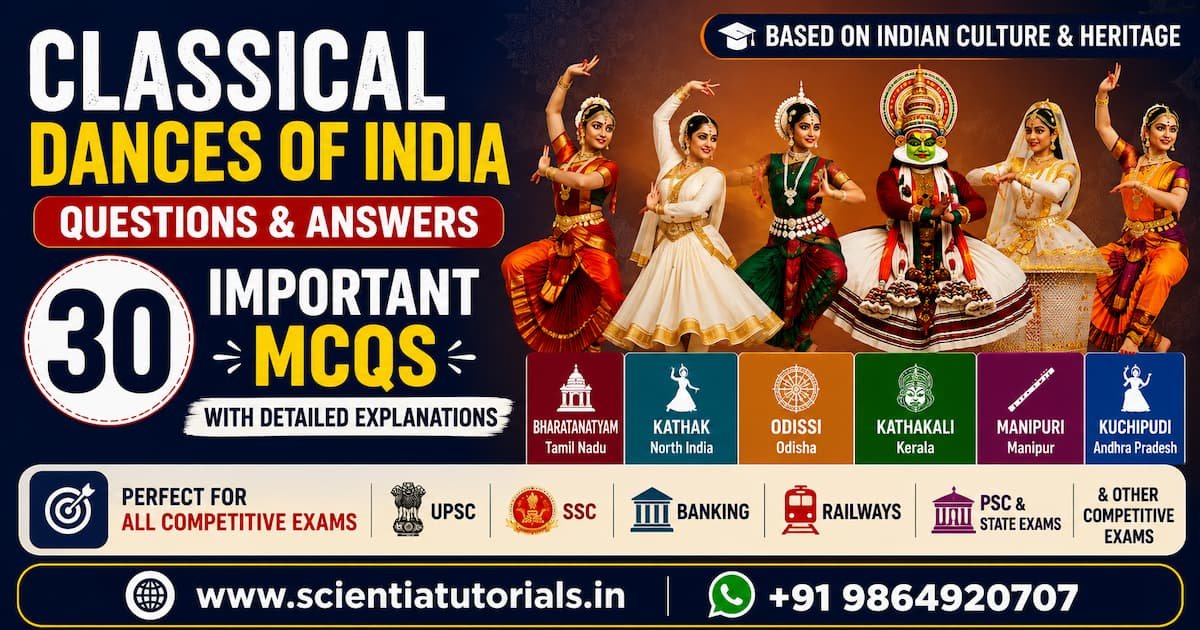
Classical Dances of India Questions and Answers – 30 Important MCQs with Detailed Explanations
The following 30 Multiple Choice Questions (MCQs) are designed for UPSC Civil Services, SSC CGL/CHSL, Banking (IBPS, SBI, RBI), Railways (RRB), State PSC, CDS, CAPF, Insurance, CUET, Teaching Eligibility Tests (CTET/TET), and other competitive examinations in India. Each question includes the correct answer along with an easy-to-understand, concept-clearing explanation.
1. Bharatanatyam originated in which Indian state?
A. Kerala
B. Karnataka
C. Tamil Nadu
D. Andhra Pradesh
✅ Answer: C. Tamil Nadu
Explanation:
Bharatanatyam is one of India’s oldest classical dance forms and originated in the temples of Tamil Nadu. It was traditionally performed by Devadasis and later revived in the 20th century. It is characterised by precise footwork, expressive hand gestures (mudras), and facial expressions (abhinaya).
Option Analysis
- A. Kerala – Known for Kathakali and Mohiniyattam.
- B. Karnataka – Associated with Yakshagana.
- C. Tamil Nadu – Correct.
- D. Andhra Pradesh – Birthplace of Kuchipudi.
2. Kathak is primarily associated with which region of India?
A. North India
B. South India
C. Eastern India
D. North-East India
✅ Answer: A. North India
Explanation:
Kathak developed in North India through temple storytelling traditions and later flourished in Mughal courts, incorporating graceful spins, rhythmic footwork, and expressive storytelling.
3. Which classical dance form originated in Kerala?
A. Kathak
B. Mohiniyattam
C. Sattriya
D. Manipuri
✅ Answer: B. Mohiniyattam
Explanation:
Mohiniyattam is the graceful classical dance of Kerala. The name means “Dance of the Enchantress (Mohini),” referring to Lord Vishnu’s female incarnation.
4. The dance-drama known for elaborate facial makeup and colourful costumes is:
A. Bharatanatyam
B. Kathakali
C. Odissi
D. Kuchipudi
✅ Answer: B. Kathakali
Explanation:
Kathakali is famous for dramatic storytelling, elaborate costumes, painted faces, and expressive eye movements depicting stories from the Ramayana and Mahabharata.
5. Odissi originated in:
A. Bihar
B. Odisha
C. West Bengal
D. Assam
✅ Answer: B. Odisha
Explanation:
Odissi developed in the temples of Odisha and is known for graceful poses, sculpturesque movements, and devotional themes dedicated to Lord Jagannath and Lord Krishna.
6. Kuchipudi originated in:
A. Andhra Pradesh
B. Telangana
C. Karnataka
D. Tamil Nadu
✅ Answer: A. Andhra Pradesh
Explanation:
Kuchipudi originated in the village of Kuchipudi in Andhra Pradesh and combines dance, drama, music, and expressive acting.
7. Manipuri dance is associated with:
A. Worship of Shiva
B. Ras Leela of Lord Krishna
C. Buddhist rituals
D. Sufi traditions
✅ Answer: B. Ras Leela of Lord Krishna
Explanation:
Manipuri dance portrays the divine love of Radha and Krishna and is known for its soft, graceful movements and devotional character.
8. Sattriya dance originated in:
A. Assam
B. Odisha
C. Punjab
D. Gujarat
✅ Answer: A. Assam
Explanation:
Sattriya was introduced by Srimanta Sankardeva in the Vaishnavite monasteries (Satras) of Assam and became recognised as a classical dance by the Sangeet Natak Akademi in 2000.
9. Which of the following is NOT a recognised classical dance of India?
A. Garba
B. Kathak
C. Odissi
D. Bharatanatyam
✅ Answer: A. Garba
Explanation:
Garba is a popular folk dance of Gujarat, whereas Kathak, Odissi, and Bharatanatyam are recognised classical dances.
10. The ancient treatise “Natya Shastra” was written by:
A. Kalidasa
B. Bharata Muni
C. Panini
D. Patanjali
✅ Answer: B. Bharata Muni
Explanation:
The Natya Shastra is the foundational text of Indian performing arts, covering dance, drama, music, stagecraft, gestures, and emotions.
11. The number of officially recognised classical dance forms in India is:
A. Six
B. Seven
C. Eight
D. Nine
✅ Answer: C. Eight
Explanation:
India officially recognises eight classical dance forms:
- Bharatanatyam
- Kathak
- Kathakali
- Mohiniyattam
- Kuchipudi
- Odissi
- Manipuri
- Sattriya
12. Which dance form is famous for fast spins (chakkars)?
A. Kathak
B. Bharatanatyam
C. Mohiniyattam
D. Odissi
✅ Answer: A. Kathak
Explanation:
Kathak dancers perform rapid and controlled spins while maintaining perfect rhythm.
13. Mohiniyattam literally means:
A. Dance of Victory
B. Dance of the Enchantress
C. Dance of Nature
D. Dance of the Goddess
✅ Answer: B. Dance of the Enchantress
Explanation:
The name comes from “Mohini,” the enchanting female form of Lord Vishnu.
14. Bharatanatyam is mainly accompanied by:
A. Carnatic music
B. Hindustani music
C. Folk music
D. Sufi music
✅ Answer: A. Carnatic music
Explanation:
Bharatanatyam performances are traditionally accompanied by Carnatic vocal and instrumental music.
15. Kathak evolved significantly during the:
A. Mughal Period
B. Mauryan Period
C. Gupta Period
D. Harappan Period
✅ Answer: A. Mughal Period
Explanation:
Kathak incorporated Persian influences and flourished under Mughal patronage.
16. Which dance form is famous for its “Tribhanga” posture?
A. Odissi
B. Kathak
C. Bharatanatyam
D. Kathakali
✅ Answer: A. Odissi
Explanation:
Tribhanga divides the body into three bends—head, torso, and knees—creating a graceful S-shaped posture.
17. Kathakali performances traditionally depict stories from:
A. Vedas only
B. Ramayana and Mahabharata
C. Buddhist texts
D. Jain literature
✅ Answer: B. Ramayana and Mahabharata
Explanation:
Kathakali artists dramatise episodes from Hindu epics using dance, music, and expressive acting.
18. The principal language used in Kathakali songs is:
A. Sanskrit
B. Malayalam
C. Tamil
D. Telugu
✅ Answer: B. Malayalam
Explanation:
Kathakali songs are mainly composed in Malayalam and Sanskritised Malayalam.
19. Which classical dance form was traditionally performed by male Brahmin artists?
A. Kuchipudi
B. Bharatanatyam
C. Manipuri
D. Odissi
✅ Answer: A. Kuchipudi
Explanation:
Initially, Kuchipudi dance-dramas were performed exclusively by male Brahmin performers before women also became prominent practitioners.
20. Sattriya dance is based mainly on:
A. Vaishnavism
B. Buddhism
C. Jainism
D. Sikhism
✅ Answer: A. Vaishnavism
Explanation:
Sattriya developed as a medium for spreading the teachings of Vaishnavism in Assam.
21. Which classical dance form is characterised by vigorous footwork and expressive storytelling?
A. Kathak
B. Mohiniyattam
C. Manipuri
D. Sattriya
✅ Answer: A. Kathak
Explanation:
Kathak combines intricate rhythmic footwork with expressive facial expressions and storytelling.
22. The dance form that emphasises graceful feminine movements is:
A. Mohiniyattam
B. Kathakali
C. Kathak
D. Sattriya
✅ Answer: A. Mohiniyattam
Explanation:
Mohiniyattam is known for soft, flowing movements reflecting feminine grace.
23. Which institution plays a major role in promoting Indian classical dances?
A. Election Commission of India
B. Sangeet Natak Akademi
C. Reserve Bank of India
D. NITI Aayog
✅ Answer: B. Sangeet Natak Akademi
Explanation:
The Sangeet Natak Akademi is India’s national academy for music, dance, and drama.
24. Which dance form frequently portrays episodes from Lord Krishna’s life?
A. Manipuri
B. Kathakali
C. Bharatanatyam
D. Kathak
✅ Answer: A. Manipuri
Explanation:
Manipuri is especially known for depicting Krishna’s Ras Leela in a devotional style.
25. Which state is associated with Sattriya dance?
A. Assam
B. Meghalaya
C. Nagaland
D. Tripura
✅ Answer: A. Assam
Explanation:
Sattriya is the classical dance tradition of Assam and forms an important part of Assamese cultural heritage.
26. Which dance form has the strongest connection with temple traditions of Tamil Nadu?
A. Bharatanatyam
B. Kathak
C. Odissi
D. Manipuri
✅ Answer: A. Bharatanatyam
Explanation:
Bharatanatyam originated in South Indian temples where it was performed as an act of devotion.
27. Which dance form uses highly stylised hand gestures called mudras?
A. Bharatanatyam
B. Kathakali
C. Odissi
D. All of the above
✅ Answer: D. All of the above
Explanation:
Mudras are an essential feature of all classical Indian dance forms, helping convey stories and emotions.
28. Which of the following pairs is correctly matched?
A. Kathak – Kerala
B. Bharatanatyam – Tamil Nadu
C. Odissi – Gujarat
D. Manipuri – Punjab
✅ Answer: B. Bharatanatyam – Tamil Nadu
Explanation:
Bharatanatyam originated in Tamil Nadu. The other options incorrectly match dance forms with states.
29. Classical dances of India primarily express:
A. Devotion, mythology, culture, and storytelling
B. Industrial development
C. Modern politics
D. Scientific discoveries
✅ Answer: A. Devotion, mythology, culture, and storytelling
Explanation:
Indian classical dances preserve India’s spiritual, cultural, and artistic traditions through expressive storytelling.
30. Which statement best describes the classical dances of India?
A. They are only forms of entertainment.
B. They are ancient performing arts combining dance, music, drama, rhythm, expressions, and spirituality, preserving India’s rich cultural heritage.
C. They originated only during British rule.
D. They are confined to one region of India.
✅ Answer: B. They are ancient performing arts combining dance, music, drama, rhythm, expressions, and spirituality, preserving India’s rich cultural heritage.
Explanation:
India’s classical dance traditions are rooted in the Natya Shastra and centuries of artistic evolution. They integrate music, rhythm, gestures (mudras), facial expressions (abhinaya), storytelling, and spirituality, making them an important component of India’s cultural heritage. Questions on classical dances frequently appear in UPSC, SSC, Banking, Railways, State PSC, CDS, CAPF, and other competitive examinations.
Quick Revision Table
| Classical Dance | State of Origin |
|---|---|
| Bharatanatyam | Tamil Nadu |
| Kathak | North India |
| Kathakali | Kerala |
| Mohiniyattam | Kerala |
| Kuchipudi | Andhra Pradesh |
| Odissi | Odisha |
| Manipuri | Manipur |
| Sattriya | Assam |