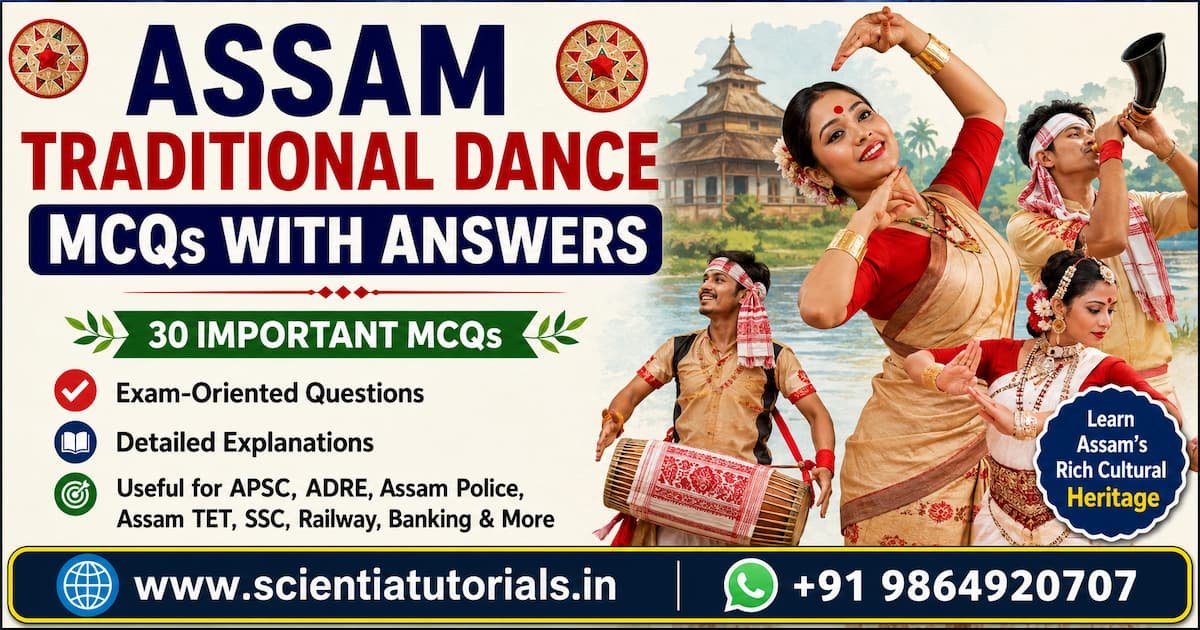
Assam Traditional Dance MCQs with Answers and Detailed Explanations for Competitive Exams
Assam Traditional Dance MCQs with Answers and Explanations
1. Which dance form is regarded as the most famous traditional dance of Assam?
(A) Bhangra
(B) Bihu Dance
(C) Garba
(D) Kathak
Answer: (B) Bihu Dance
Explanation:
Bihu Dance is the most popular folk dance of Assam and is closely associated with the Bihu festivals, especially Rongali Bihu. It symbolizes joy, youthfulness, love, and prosperity. Bhangra belongs to Punjab, Garba to Gujarat, and Kathak is a classical dance form of North India.
2. Bihu Dance is mainly performed during which festival?
(A) Durga Puja
(B) Holi
(C) Rongali Bihu
(D) Diwali
Answer: (C) Rongali Bihu
Explanation:
Rongali Bihu, celebrated in April, marks the Assamese New Year and the arrival of spring. Bihu Dance is an integral part of this festival. It reflects the happiness of farmers and the beginning of a new agricultural season.
3. Which musical instrument is most commonly associated with Bihu Dance?
(A) Tabla
(B) Dhol
(C) Mridangam
(D) Veena
Answer: (B) Dhol
Explanation:
The Assamese Dhol is the primary percussion instrument used in Bihu performances. Other instruments include Pepa, Gogona, and Taal. Together, they create the energetic rhythm characteristic of Bihu Dance.
4. What is the “Pepa” used in Bihu performances?
(A) A string instrument
(B) A drum
(C) A wind instrument made from buffalo horn
(D) A flute made of bamboo
Answer: (C) A wind instrument made from buffalo horn
Explanation:
Pepa is a traditional wind instrument made from buffalo horn. Its distinctive sound is an important feature of Bihu celebrations and Assamese folk music.
5. Which traditional dance of Assam is performed by the tea tribes?
(A) Jhumur Dance
(B) Sattriya Dance
(C) Bagurumba Dance
(D) Deodhani Dance
Answer: (A) Jhumur Dance
Explanation:
Jhumur Dance is performed by Assam’s tea garden communities. It is characterized by rhythmic movements and folk songs reflecting daily life, love, and social traditions.
6. Bagurumba Dance is traditionally performed by which community?
(A) Karbi
(B) Bodo
(C) Ahom
(D) Mishing
Answer: (B) Bodo
Explanation:
Bagurumba is the traditional folk dance of the Bodo community. It is often called the “Butterfly Dance” because the dancers imitate the graceful movements of butterflies and birds.
7. Bagurumba Dance is generally performed by:
(A) Men only
(B) Women only
(C) Children only
(D) Both men and women equally in all performances
Answer: (B) Women only
Explanation:
Bagurumba is predominantly performed by Bodo women. The dance expresses harmony with nature and is accompanied by traditional musical instruments.
8. Which Assamese dance form has been recognized as one of India’s classical dances?
(A) Bihu
(B) Bagurumba
(C) Sattriya
(D) Jhumur
Answer: (C) Sattriya
Explanation:
Sattriya was recognized as a Classical Dance of India by the Government of India in 2000. It originated in the Vaishnavite monasteries (Satras) established by Srimanta Sankardeva.
9. Who is considered the founder of Sattriya Dance?
(A) Madhabdeva
(B) Sankardev
(C) Lachit Borphukan
(D) Bhaskar Varman
Answer: (B) Sankardev
Explanation:
Srimanta Sankardeva, the great saint, social reformer, and cultural icon of Assam, introduced Sattriya as part of the Neo-Vaishnavite movement to spread religious teachings through art and performance.
10. Sattriya Dance originated in:
(A) Tea gardens
(B) Royal courts
(C) Satras (Vaishnavite monasteries)
(D) Tribal villages
Answer: (C) Satras (Vaishnavite monasteries)
Explanation:
Sattriya developed within the Satras as a medium for religious devotion and storytelling. It combines dance, drama, music, and spirituality.
11. Which dance form is known as the “Butterfly Dance” of Assam?
(A) Deodhani
(B) Jhumur
(C) Bagurumba
(D) Bihu
Answer: (C) Bagurumba
Explanation:
Bagurumba is often called the Butterfly Dance because its movements resemble butterflies fluttering among flowers, symbolizing beauty and harmony with nature.
12. Deodhani Dance is associated with the worship of:
(A) Lord Krishna
(B) Goddess Manasa
(C) Lord Shiva
(D) Goddess Lakshmi
Answer: (B) Goddess Manasa
Explanation:
Deodhani Dance is a ritualistic dance associated with the worship of Goddess Manasa, the serpent goddess. It is performed during religious ceremonies and festivals.
13. Deodhani Dance is mainly famous in which district of Assam?
(A) Dhubri
(B) Darrang
(C) Hailakandi
(D) Karimganj
Answer: (B) Darrang
Explanation:
The Deodhani Dance is particularly associated with Darrang district and is performed during the Manasa Puja festival with religious fervor.
14. Which dance form reflects the culture and traditions of the Mishing community?
(A) Ali-Aye-Ligang Dance
(B) Jhumur Dance
(C) Bihu Dance
(D) Sattriya Dance
Answer: (A) Ali-Aye-Ligang Dance
Explanation:
The Mishing community performs dances during the Ali-Aye-Ligang festival, which celebrates the beginning of sowing season and agricultural activities.
15. Ali-Aye-Ligang festival is related to:
(A) Fishing
(B) Harvesting tea
(C) Agriculture and sowing seeds
(D) Trade activities
Answer: (C) Agriculture and sowing seeds
Explanation:
The festival marks the commencement of agricultural activities and is one of the most important celebrations of the Mishing people.
16. Which dance form of Assam is associated with martial traditions?
(A) Bhortal Dance
(B) Bihu Dance
(C) Jhumur Dance
(D) Bagurumba Dance
Answer: (A) Bhortal Dance
Explanation:
Bhortal Dance incorporates vigorous movements and synchronized rhythms. It evolved from Vaishnavite traditions and displays energy and discipline.
17. The main feature of Bhortal Dance is the use of:
(A) Shields
(B) Bamboo sticks
(C) Cymbals (Bhortal)
(D) Spears
Answer: (C) Cymbals (Bhortal)
Explanation:
The name Bhortal comes from the large cymbals used by performers. The rhythmic striking of these cymbals forms the essence of the dance.
18. Which dance form is performed as part of Ankiya Naat?
(A) Sattriya
(B) Jhumur
(C) Bihu
(D) Deodhani
Answer: (A) Sattriya
Explanation:
Ankiya Naat are one-act plays written by Sankardeva. Sattriya dance forms an important component of these religious dramas.
19. Which traditional Assamese dance primarily celebrates youth and romance?
(A) Bihu Dance
(B) Sattriya Dance
(C) Deodhani Dance
(D) Bhortal Dance
Answer: (A) Bihu Dance
Explanation:
Bihu Dance is famous for expressing youthful energy, courtship, love, and happiness through lively movements and songs.
20. Which instrument is commonly played by women during Bihu?
(A) Gogona
(B) Veena
(C) Sarangi
(D) Santoor
Answer: (A) Gogona
Explanation:
Gogona is a traditional bamboo instrument often played by women during Bihu celebrations. It adds a unique rhythmic sound to performances.
21. Sattriya Dance mainly depicts stories from:
(A) Greek mythology
(B) Ramayana and Bhagavata traditions
(C) Modern history
(D) Tribal legends only
Answer: (B) Ramayana and Bhagavata traditions
Explanation:
Sattriya performances are based on Vaishnavite themes, especially stories of Lord Krishna and episodes from sacred Hindu texts.
22. Which dance form is known for trance-like performances?
(A) Deodhani Dance
(B) Bihu Dance
(C) Bagurumba Dance
(D) Jhumur Dance
Answer: (A) Deodhani Dance
Explanation:
Performers in Deodhani Dance often enter a trance-like spiritual state, reflecting devotion to Goddess Manasa.
23. The attire of Bihu dancers generally includes:
(A) Mekhela Chador for women
(B) Kimono
(C) Saree from Maharashtra only
(D) Lehenga from Rajasthan only
Answer: (A) Mekhela Chador for women
Explanation:
Women performing Bihu commonly wear traditional Assamese Mekhela Chador, often woven with beautiful motifs and designs.
24. Which community performs Bagurumba Dance?
(A) Rabha
(B) Tiwa
(C) Bodo
(D) Koch
Answer: (C) Bodo
Explanation:
Bagurumba is one of the most important cultural symbols of the Bodo people and showcases their close relationship with nature.
25. Which Assamese dance form has strong religious significance?
(A) Sattriya
(B) Bihu
(C) Jhumur
(D) Bagurumba
Answer: (A) Sattriya
Explanation:
Sattriya originated as a devotional art form in Vaishnavite monasteries and remains deeply connected with religious worship and spiritual expression.
26. The rhythmic clapping and energetic movements are characteristics of:
(A) Bihu Dance
(B) Deodhani Dance
(C) Sattriya Dance
(D) Ali-Aye-Ligang Dance
Answer: (A) Bihu Dance
Explanation:
Bihu Dance is famous for its fast rhythm, energetic body movements, clapping patterns, and vibrant music.
27. Which dance form of Assam reflects harmony with nature?
(A) Bagurumba
(B) Bhortal
(C) Deodhani
(D) Sattriya
Answer: (A) Bagurumba
Explanation:
The graceful movements of Bagurumba imitate butterflies, birds, and natural elements, symbolizing the Bodo people’s connection with nature.
28. Which Assamese saint greatly contributed to dance, drama, and music traditions?
(A) Lachit Borphukan
(B) Sankardeva
(C) Chilarai
(D) Gopinath Bordoloi
Answer: (B) Sankardeva
Explanation:
Sankardeva revolutionized Assamese culture through literature, music (Borgeet), drama (Ankiya Naat), and Sattriya dance.
29. Which dance is most closely linked with Assamese identity at the national level?
(A) Jhumur Dance
(B) Deodhani Dance
(C) Bihu Dance
(D) Bhortal Dance
Answer: (C) Bihu Dance
Explanation:
Bihu Dance is widely recognized as the cultural symbol of Assam and is frequently showcased at national and international events.
30. Which of the following pairs is correctly matched?
(A) Bagurumba — Bodo Community
(B) Sattriya — Tea Tribes
(C) Jhumur — Vaishnavite Monasteries
(D) Deodhani — Mishing Community
Answer: (A) Bagurumba — Bodo Community
Explanation:
Bagurumba belongs to the Bodo community. Sattriya originated in Vaishnavite Satras, Jhumur is associated with tea tribes, and Deodhani is linked to the worship of Goddess Manasa.
Quick Revision Facts for Competitive Exams
- Bihu Dance – Most famous folk dance of Assam; associated with Rongali Bihu.
- Sattriya Dance – Classical dance of Assam; founded by Srimanta Sankardeva; recognized as a classical dance in 2000.
- Bagurumba Dance – Traditional dance of the Bodo community; known as the Butterfly Dance.
- Jhumur Dance – Performed by Tea Tribe communities.
- Deodhani Dance – Ritual dance associated with Goddess Manasa.
- Ali-Aye-Ligang Dance – Traditional dance of the Mishing community.
- Bhortal Dance – Famous for the use of large cymbals (Bhortal).
These MCQs are highly useful for APSC, ADRE, Assam Police, Assam TET, Grade III, Grade IV, SSC, Railway, Banking, and other competitive examinations.