
CBSE Class 11 History – MCQs with Answers and Explanations
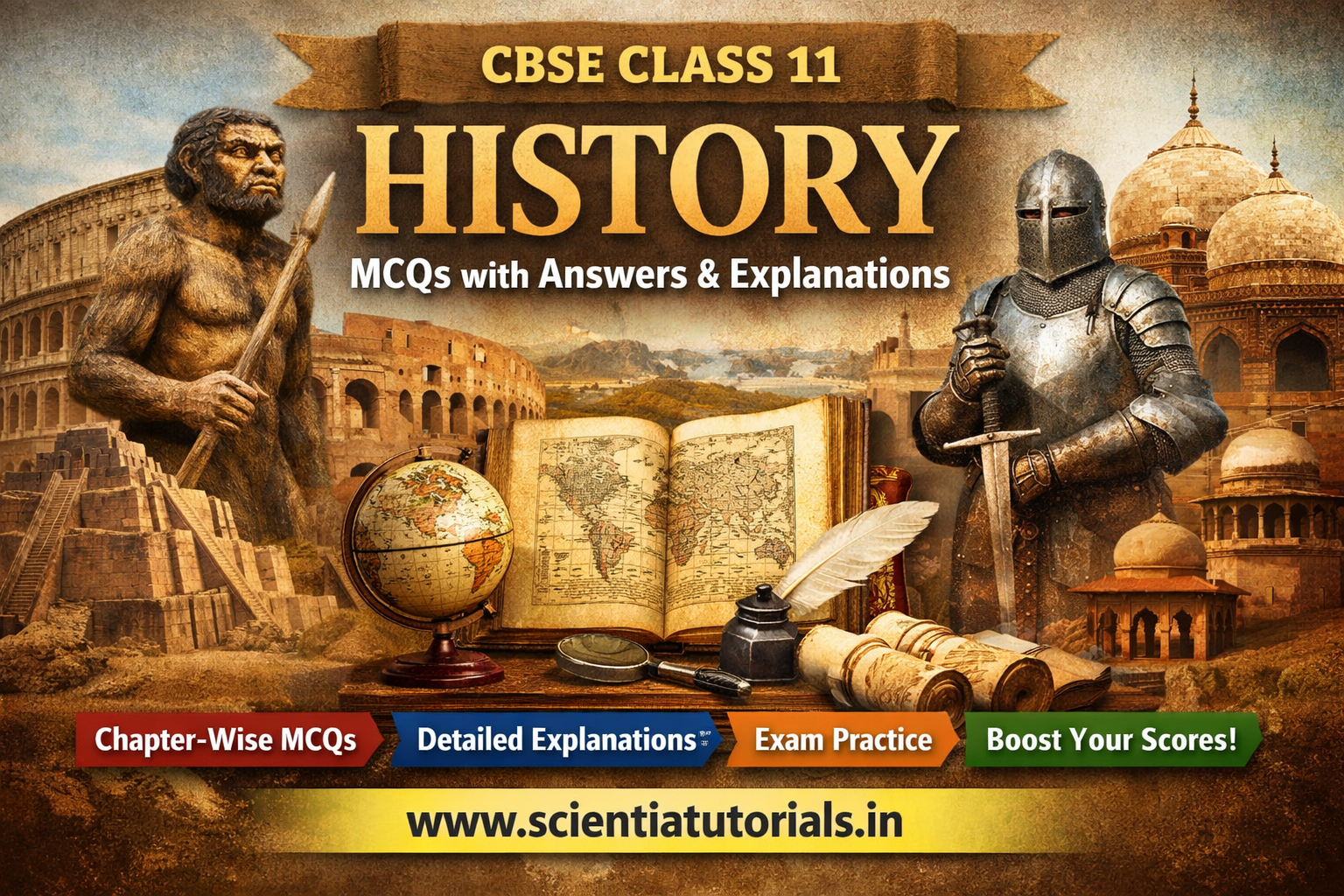
Course Overview: CBSE Class 11 History – MCQs with Answers and Explanations The CBSE Class 11 History – MCQs with Answers and Explanations course is designed to help students build a strong conceptual foundation in world history while preparing effectively …

Overview
Course Overview: CBSE Class 11 History – MCQs with Answers and Explanations
The CBSE Class 11 History – MCQs with Answers and Explanations course is designed to help students build a strong conceptual foundation in world history while preparing effectively for school examinations and competitive assessments. Aligned with the latest CBSE syllabus and NCERT guidelines, this course presents chapter-wise multiple-choice questions supported by clear answers and detailed explanations.
-
Class 11 History MCQs with Answers
-
CBSE Class 11 History Objective Questions
-
NCERT Class 11 History MCQ Practice
-
World History MCQs Class 11 CBSE
-
Class 11 History Chapter-wise MCQs
📚 What This Course Covers
The course spans all major themes from the Class 11 History syllabus, including:
-
From the Beginning of Time – Human evolution and early societies
-
Writing and City Life – Mesopotamian civilization
-
An Empire Across Three Continents – Roman Empire
-
The Central Islamic Lands – Rise of Islam and Islamic empires
-
Nomadic Empires – Mongols and Central Asian history
-
The Three Orders – Medieval European society
-
Changing Cultural Traditions – Renaissance and cultural transformations
-
Confrontation of Cultures – Encounters between the Old and New Worlds
-
The Industrial Revolution – Economic and social changes
-
Displacing Indigenous Peoples – Impact of colonization
-
Paths to Modernization – China, Japan, and modern world developments
🎯 Course Objectives
-
Strengthen conceptual understanding of historical events and processes
-
Develop analytical and critical thinking skills
-
Improve accuracy and speed in solving MCQs
-
Prepare students for school exams, CUET, and other entrance tests
📝 Key Features
-
Chapter-wise MCQs strictly based on NCERT
-
Detailed explanations for every answer
-
Exam-oriented questions (assertion–reason, case-based, source-based)
-
Self-assessment practice sets
-
Revision-friendly format for quick learning
👩🎓 Who Should Enroll
-
CBSE Class 11 students
-
Students preparing for CUET and other entrance exams
-
Learners seeking conceptual clarity in world history
Curriculum
- 11 Sections
- 55 Lessons
- Lifetime
- 🏺 Section 1: From the Beginning of TimeThis section explores the origins and evolution of human beings from early hominids to modern humans. It covers key stages of human development, the Stone Age, hunter-gatherer societies, tool-making, use of fire, and the beginnings of social life. Through MCQs with answers and explanations, students gain a clear understanding of prehistoric life and human adaptation to changing environments.5
- 🏙️ Section 2: Writing and City LifeThis section focuses on the rise of the first cities in Mesopotamia and the development of early urban societies. It highlights the invention of writing (cuneiform), trade, administration, social hierarchy, and cultural life. MCQs with answers and explanations help students understand how writing and urbanization shaped ancient civilizations.5
- 🏛️ Section 3: An Empire Across Three ContinentsThis section examines the rise and expansion of the Roman Empire across Europe, Asia, and Africa. It covers Roman administration, economy, society, military organization, and cultural life. Through MCQs with answers and explanations, students gain a concise understanding of how Rome governed vast territories and influenced world history.5
- 🕌 Section 4: The Central Islamic LandsThis section explores the rise and expansion of Islamic civilizations in West and Central Asia. It covers the emergence of Islam, the Caliphates, administration, trade, culture, and intellectual developments. MCQs with answers and explanations help students grasp the political, economic, and cultural foundations of the central Islamic world.5
- 🐎 Section 5: Nomadic EmpiresThis section highlights the rise of nomadic powers, especially the Mongol Empire under Genghis Khan. It examines nomadic society, military strategies, expansion, administration, and interactions with settled civilizations. MCQs with answers and explanations help students understand the impact of nomadic empires on trade, culture, and world history.5
- ⚔️ Section 6: The Three OrdersThis section explores medieval European society structured into three social orders—clergy, nobility, and peasants. It covers feudalism, manorial systems, roles of knights, and the life of peasants. MCQs with answers and explanations help students understand the social, economic, and political framework of feudal Europe.5
- 🎨 Section 7: Changing Cultural TraditionsThis section examines the cultural transformation in Europe during the Renaissance. It highlights humanism, developments in art, literature, science, and the role of patrons and universities. MCQs with answers and explanations help students understand how new ideas reshaped European society and culture.5
- 🌎 Section 8: Confrontation of CulturesThis section explores the encounters between European explorers and the indigenous civilizations of the Americas. It covers voyages of discovery, the Aztec and Inca empires, cultural exchanges, conflicts, and the impact of colonization. MCQs with answers and explanations help students understand the global consequences of these cultural confrontations.5
- 🏭 Section 9: The Industrial RevolutionThis section examines the transition from agrarian economies to industrialized societies, beginning in Britain. It covers technological innovations, factory systems, urbanization, and changes in labour and living conditions. MCQs with answers and explanations help students understand the economic and social impact of industrialization.5
- 🏛️ Section 10: Displacing Indigenous PeoplesThis section explores the impact of European expansion on indigenous communities in the Americas and Australia. It examines colonization, land dispossession, population decline, and cultural disruption. MCQs with answers and explanations help students understand the historical consequences of displacement and imperial policies.5
- 🏯 Section 11: Paths to ModernizationThis section examines the transformation of Asian societies, focusing on China and Japan’s journeys toward modernization. It covers political reforms, industrial growth, social changes, and global interactions. MCQs with answers and explanations help students understand how different nations adopted distinct paths to become modern states.5
You May Like
CBSE Class 12 History – MCQs with Answers and Explanations
Course Overview: CBSE Class 12 History – MCQs with Answers and Explanations The CBSE Class 12 History – MCQs with Answers and Explanations course is...
CBSE Class 11 History MCQs – Online Practice Test – Chapter Wise
Prepare effectively for your CBSE Class 11 History board exams with our Chapter-Wise Online MCQ Practice Tests, designed strictly as per the latest NCERT syllabus....
CBSE Class 11 History MCQs – Online Practice Test
CBSE Class 11 History syllabus (NCERT-based – Themes in Indian History) Part A: Early Societies Theme 1: From the Beginning of Time Theme 2: Writing...
Course Features
- Lectures 55
- Quiz 0
- Duration Lifetime access
- Skill level All levels
- Language English
- Students 0
- Assessments Yes