
Most Controversial and Conspiracy Cases in Indian History – A Chronological, Evidence-Based Analysis
📘 Most Controversial & Conspiracy Cases in Indian History Chronological Era-Wise Module-Wise Course Structure Below is a systematically organised, academically balanced, lesson-wise and module-wise course, converted directly from the earlier list and structured strictly in chronological order. In this Course, …

Overview
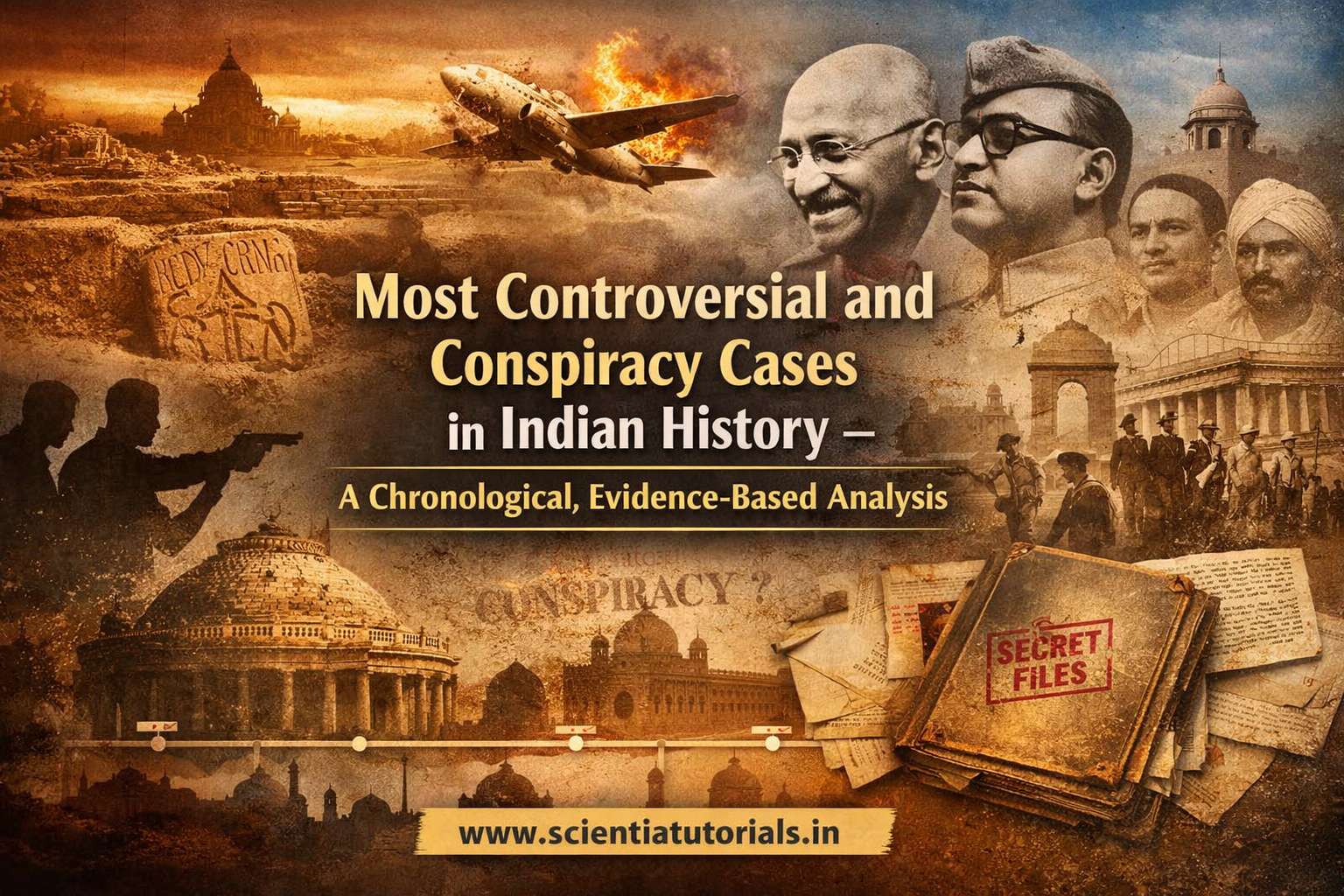
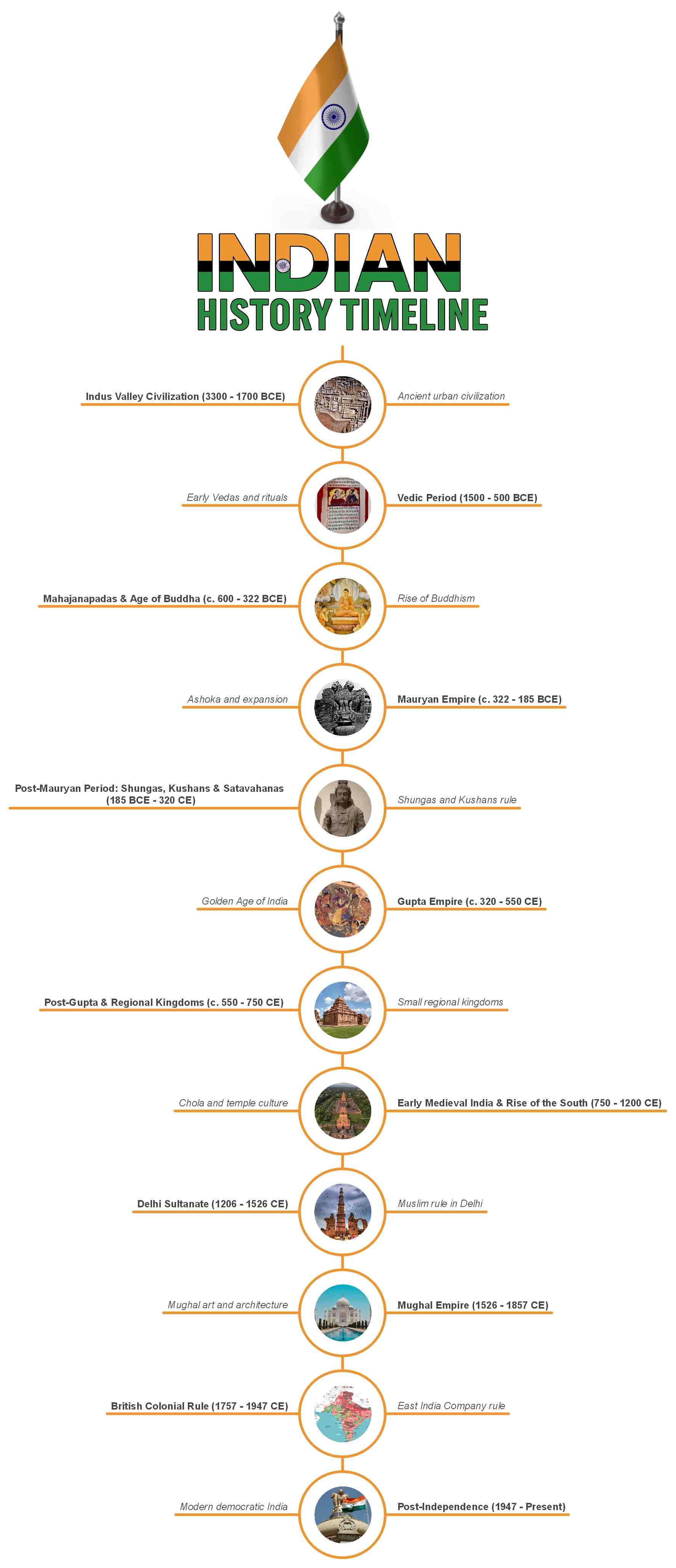
📘 Most Controversial & Conspiracy Cases in Indian History
Chronological Era-Wise Module-Wise Course Structure
Below is a systematically organised, academically balanced, lesson-wise and module-wise course, converted directly from the earlier list and structured strictly in chronological order.
In this Course, each Lesson under the Modules is divided into 4 Sections, as mentioned below:
- Study Module with Revision Notes,
- Questions with Answers,
- MCQs with Answers and detailed explanations.
This online learning course offers a comprehensive, chronological, and evidence-based understanding of the History of India, with special focus on controversial events, debates, and critical interpretations. Designed for both conceptual clarity and exam readiness, the course strengthens analytical thinking, source evaluation, and answer-writing skills required in competitive examinations.
The content is highly relevant for aspirants preparing for UPSC (CSE), State PSCs (APSC, UPPSC, BPSC, MPPSC, MPSC, WBCS, RPSC, TNPSC, etc.), UGC-NET/JRF, CUET (UG/PG), SSC, NDA, CDS, CAPF, as well as CBSE, ICSE, State Board examinations, and college/university undergraduate and postgraduate courses where History of India is a core subject.
🔹 Module 1: Archaeological & Textual Controversies of Ancient India
Era / Phase Name: Protohistoric & Early Ancient India
Timeline: c. 3000 BCE – 600 BCE
Historical Context
- Emergence of early urban and pastoral societies
- Transition from archaeology-based to text-based history
Nature of Historical Evidence
- Archaeological remains
- Carbon dating
- Early literary traditions
Key Historical Characteristics
- Limited sources
- Heavy reliance on interpretation
Lessons
- The Indus Valley Decline Debate: Collapse or Cultural Transformation?
- Aryan Migration vs Indigenous Development: A Historical Debate
- Archaeological Gaps and Competing Interpretations
- Textual Interpolations in Early Indian Literature
- How Historians Reconstruct Ancient Indian History
🔹 Module 2: Political Mysteries of Early Historic India
Era / Phase Name: Mahajanapada & Mauryan Age
Timeline: c. 600 BCE – 185 BCE
Historical Context
- Rise of territorial states
- Formation of early empires
Nature of Historical Evidence
- Buddhist and Jain texts
- Inscriptions and foreign accounts
Key Historical Characteristics
- Court politics and succession struggles
Lessons
- Political Assassinations in Early Indian Kingdoms
- Succession Disputes and Power Struggles in the Mauryan Empire
- Chandragupta Maurya’s Rise: History and Interpretations
- Ashoka’s Dhamma: Moral Transformation or Political Strategy?
- Limits of Ancient Political Sources
🔹 Module 3: Classical India and the “Golden Age” Debate
Era / Phase Name: Gupta & Post-Gupta Period
Timeline: c. 320 CE – 750 CE
Historical Context
- Political stability followed by fragmentation
Nature of Historical Evidence
- Coins, inscriptions, literary works, travelogues
Key Historical Characteristics
- Cultural prosperity vs political decline debates
Lessons
- The Gupta “Golden Age”: Myth or Historical Reality?
- Causes of the Gupta Decline: Internal or External?
- Religious Change and Historical Interpretation
- Reassessing Classical Indian Political History
🔹 Module 4: Court Politics & Conspiracies in Early Medieval India
Era / Phase Name: Early Medieval India
Timeline: c. 750 CE – 1200 CE
Historical Context
- Rise of regional powers
- Frequent warfare and succession conflicts
Nature of Historical Evidence
- Court chronicles
- Temple inscriptions
Key Historical Characteristics
- Political instability
- Royal assassinations
Lessons
- Court Politics and Power Struggles in Early Medieval India
- Rajput Resistance: Military Defeat or Internal Betrayal?
- Succession Conflicts and Political Violence
- Evaluating Medieval Historical Narratives
🔹 Module 5: Sultanate & Mughal Court Conspiracies
Era / Phase Name: Delhi Sultanate & Mughal Empire
Timeline: c. 1200 CE – 1707 CE
Historical Context
- Centralised imperial rule
- Intense court factionalism
Nature of Historical Evidence
- Persian chronicles
- European traveller accounts
Key Historical Characteristics
- Assassinations and succession wars
Lessons
- Palace Conspiracies in the Delhi Sultanate
- Mughal Succession Wars and Political Intrigues
- Religious Policy: Historical Debate vs Popular Narrative
- Interpreting Imperial Court Chronicles
🔹 Module 6: Colonial India – Intelligence, Resistance & Cover-Ups
Era / Phase Name: Company & Crown Rule
Timeline: c. 1757 CE – 1917 CE
Historical Context
- British expansion and consolidation
- Growth of anti-colonial resistance
Nature of Historical Evidence
- Colonial archives
- Intelligence and police reports
Key Historical Characteristics
- Surveillance and repression
- Information control
Lessons
- British Intelligence Networks in Colonial India
- Political Assassinations under Colonial Rule
- The 1857 Revolt: Planned Conspiracy or Popular Uprising?
- Colonial Records: Biases and Silences
🔹 Module 7: Freedom Struggle & Disputed Narratives
Era / Phase Name: Indian National Movement
Timeline: 1917 CE – 1947 CE
Historical Context
- Mass movements and revolutionary activity
Nature of Historical Evidence
- Government files
- Memoirs, oral histories, commission reports
Key Historical Characteristics
- Underground networks
- Disputed deaths and surveillance
Lessons
- Revolutionary Movements and Secret Networks
- The Death of Subhas Chandra Bose: Investigations and Debates
- Colonial Intelligence Surveillance of National Leaders
- Interpreting Conflicting Freedom Struggle Narratives
🔹 Module 8: Early Post-Independence Political Controversies
Era / Phase Name: Early Republic of India
Timeline: 1947 CE – 1980 CE
Historical Context
- Nation-building and political consolidation
Nature of Historical Evidence
- Judicial inquiry reports
- Parliamentary debates
Key Historical Characteristics
- Political violence
- Institutional stress
Lessons
- Assassination of Mahatma Gandhi: Facts and Debates
- Death of Lal Bahadur Shastri: An Unresolved Case
- The Emergency (1975–77): Constitutional Crisis or Political Conspiracy?
🔹 Module 9: Late 20th Century Political Assassinations
Era / Phase Name: Crisis and Coalition Era
Timeline: 1980 CE – 2000 CE
Historical Context
- Regional conflicts and coalition politics
Nature of Historical Evidence
- Court judgments
- Media investigations
Key Historical Characteristics
- Intelligence failures
- Political destabilisation
Lessons
- Assassination of Indira Gandhi and Its Aftermath
- Assassination of Rajiv Gandhi: Established Conspiracy and Gaps
- The Bofors Scandal: Legal Outcome vs Political Impact
🔹 Module 10: Contemporary India – Unresolved Cases & Conspiracy Debates
Era / Phase Name: Contemporary India
Timeline: 2000 CE – Present
Historical Context
- Media expansion and digital narratives
Nature of Historical Evidence
- Court rulings
- Investigative journalism
- Declassified documents
Key Historical Characteristics
- Competing public narratives
- Judicial scrutiny
Lessons
- High-Profile Political Murder Cases in Contemporary India
- Judiciary, Media, and Public Trust
- Intelligence, Surveillance, and Democratic Accountability
- Distinguishing Fact, Interpretation, and Allegation in Modern History
✅ Course Outcomes
- Builds critical historical thinking
- Trains learners to separate evidence from speculation
- Highly relevant for UPSC, PSC, NET, CUET, SSC
⚖️ Disclaimer
This course, “Most Controversial and Conspiracy Cases in Indian History – A Chronological, Evidence-Based Analysis,” is developed exclusively for academic and educational purposes. The content is grounded in archaeological evidence, primary and secondary historical sources, judicial records (where applicable), and peer-reviewed scholarly research.
The term “controversial” is used in a historiographical sense, referring to events and interpretations that are debated among historians due to limitations of evidence or differing methodological approaches. References to “conspiracy” are included strictly for critical examination, and not as assertions of fact, unless supported by officially investigated or judicially established findings.
This course does not promote sensationalism, speculation, or unverified narratives. Clear distinctions are maintained between:
- established historical facts,
- scholarly interpretations and debates, and
- unproven allegations or contested theories.
The material is structured to aid conceptual clarity, analytical thinking, and examination preparation for school-level, university-level, and competitive examinations such as UPSC, State PSC, NET, CUET, and SSC. Historical interpretations discussed herein are subject to revision in light of new evidence, and learners are encouraged to engage with the content using critical, evidence-based reasoning.
The course does not intend to offend, misrepresent, or advance ideological positions, and adheres to accepted academic, ethical, and educational standards.
Curriculum
- 10 Sections
- 48 Lessons
- Lifetime
- 🔹 Module 1: Archaeological & Textual Controversies of Ancient India Timeline: c. 3000 BCE – 600 BCE🔹 Module 1: Archaeological & Textual Controversies of Ancient India Era / Phase Name: Protohistoric & Early Ancient India Timeline: c. 3000 BCE – 600 BCE Historical Context Emergence of early urban and pastoral societies Transition from archaeology-based to text-based history Nature of Historical Evidence Archaeological remains Carbon dating Early literary traditions Key Historical Characteristics Limited sources Heavy reliance on interpretation5
- 🔹 Module 2: Political Mysteries of Early Historic India Timeline: c. 600 BCE – 185 BCE🔹 Module 2: Political Mysteries of Early Historic India Era / Phase Name: Mahajanapada & Mauryan Age Timeline: c. 600 BCE – 185 BCE Historical Context Rise of territorial states Formation of early empires Nature of Historical Evidence Buddhist and Jain texts Inscriptions and foreign accounts Key Historical Characteristics Court politics and succession struggles5
- 🔹 Module 3: Classical India and the “Golden Age” Debate Timeline: c. 320 CE – 750 CE🔹 Module 3: Classical India and the “Golden Age” Debate Era / Phase Name: Gupta & Post-Gupta Period Timeline: c. 320 CE – 750 CE Historical Context Political stability followed by fragmentation Nature of Historical Evidence Coins, inscriptions, literary works, travelogues Key Historical Characteristics Cultural prosperity vs political decline debates4
- 🔹 Module 4: Court Politics & Conspiracies in Early Medieval India Timeline: c. 750 CE – 1200 CE🔹 Module 4: Court Politics & Conspiracies in Early Medieval India Era / Phase Name: Early Medieval India Timeline: c. 750 CE – 1200 CE Historical Context Rise of regional powers Frequent warfare and succession conflicts Nature of Historical Evidence Court chronicles Temple inscriptions Key Historical Characteristics Political instability Royal assassinations12
- 4.1Court Politics and Power Struggles in Early Medieval India – Study Module with Revision Notes
- 4.2Court Politics and Power Struggles in Early Medieval India – Questions with Answers
- 4.3Court Politics and Power Struggles in Early Medieval India – MCQs with Answers
- 4.4Rajput Resistance: Military Defeat or Internal Betrayal? – Study Module with Revision Notes
- 4.5Rajput Resistance: Military Defeat or Internal Betrayal? – Questions with Answers
- 4.6Rajput Resistance: Military Defeat or Internal Betrayal? – MCQs with Answers
- 4.7Succession Conflicts and Political Violence – Study Module with Revision Notes
- 4.8Succession Conflicts and Political Violence – Questions with Answers
- 4.9Succession Conflicts and Political Violence – MCQs with Answers
- 4.10Evaluating Medieval Historical Narratives – Study Module with Revision Notes
- 4.11Evaluating Medieval Historical Narratives – Questions with Answers
- 4.12Evaluating Medieval Historical Narratives – MCQs with Answers
- 🔹 Module 5: Sultanate & Mughal Court Conspiracies Timeline: c. 1200 CE – 1707 CE🔹 Module 5: Sultanate & Mughal Court Conspiracies Era / Phase Name: Delhi Sultanate & Mughal Empire Timeline: c. 1200 CE – 1707 CE Historical Context Centralised imperial rule Intense court factionalism Nature of Historical Evidence Persian chronicles European traveller accounts Key Historical Characteristics Assassinations and succession wars4
- 🔹 Module 6: Colonial India – Intelligence, Resistance & Cover-Ups Timeline: c. 1757 CE – 1917 CE🔹 Module 6: Colonial India – Intelligence, Resistance & Cover-Ups Era / Phase Name: Company & Crown Rule Timeline: c. 1757 CE – 1917 CE Historical Context British expansion and consolidation Growth of anti-colonial resistance Nature of Historical Evidence Colonial archives Intelligence and police reports Key Historical Characteristics Surveillance and repression Information control4
- 🔹 Module 7: Freedom Struggle & Disputed Narratives Timeline: 1917 CE – 1947 CE🔹 Module 7: Freedom Struggle & Disputed Narratives Era / Phase Name: Indian National Movement Timeline: 1917 CE – 1947 CE Historical Context Mass movements and revolutionary activity Nature of Historical Evidence Government files Memoirs, oral histories, commission reports Key Historical Characteristics Underground networks Disputed deaths and surveillance4
- 🔹 Module 8: Early Post-Independence Political Controversies Timeline: 1947 CE – 1980 CE🔹 Module 8: Early Post-Independence Political Controversies Era / Phase Name: Early Republic of India Timeline: 1947 CE – 1980 CE Historical Context Nation-building and political consolidation Nature of Historical Evidence Judicial inquiry reports Parliamentary debates Key Historical Characteristics Political violence Institutional stress3
- 🔹 Module 9: Late 20th Century Political Assassinations Timeline: 1980 CE – 2000 CE🔹 Module 9: Late 20th Century Political Assassinations Era / Phase Name: Crisis and Coalition Era Timeline: 1980 CE – 2000 CE Historical Context Regional conflicts and coalition politics Nature of Historical Evidence Court judgments Media investigations Key Historical Characteristics Intelligence failures Political destabilisation3
- 🔹 Module 10: Contemporary India – Unresolved Cases & Conspiracy Debates Timeline: 2000 CE – Present🔹 Module 10: Contemporary India – Unresolved Cases & Conspiracy Debates Era / Phase Name: Contemporary India Timeline: 2000 CE – Present Historical Context Media expansion and digital narratives Nature of Historical Evidence Court rulings Investigative journalism Declassified documents Key Historical Characteristics Competing public narratives Judicial scrutiny4
You May Like

History of India – Complete Chronological and Era-Wise Course
History of India – Complete Chronological & Era-Wise Course (Indian History Timeline from Prehistoric Age to Contemporary India) In this Course, each Lesson under the...
Course Features
- Lectures 48
- Quiz 0
- Duration Lifetime access
- Skill level All levels
- Language English
- Students 0
- Assessments Yes