
Archaeological Gaps and Competing Interpretations
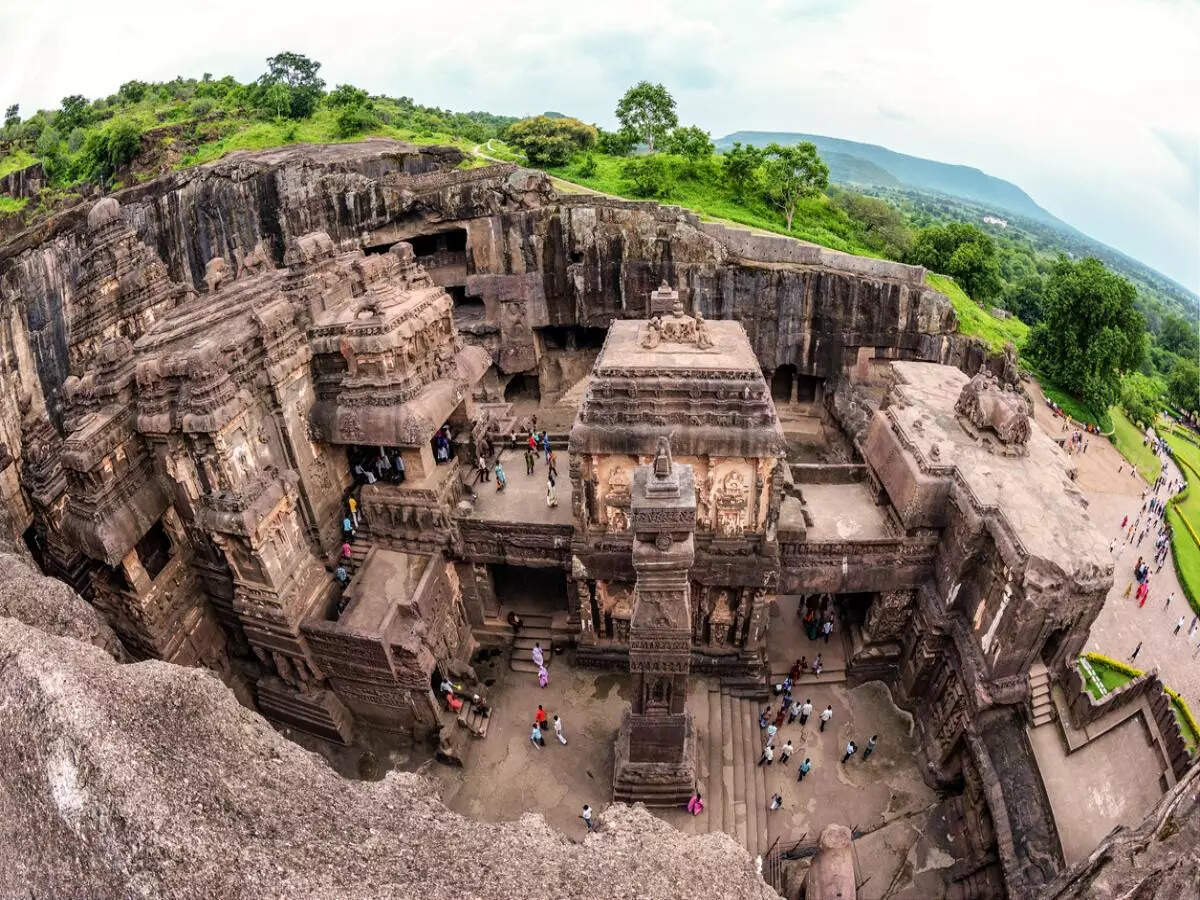
Archaeological Gaps and Competing Interpretations
(Archaeological & Textual Controversies of Ancient India | c. 3000 BCE – 600 BCE)
1. Introduction: What Are Archaeological Gaps?
Archaeology is the primary source for reconstructing ancient Indian history, especially for periods with limited or no written records. However, archaeological evidence is often fragmentary, unevenly distributed, and incomplete. These limitations create archaeological gaps, leading historians to propose multiple and sometimes conflicting interpretations of the same past events.
This lesson critically examines how gaps in archaeological data give rise to competing historical interpretations, making it a core topic for understanding historical methodology, historiography, and examination-oriented analytical skills.
2. Importance of Archaeology in Ancient Indian History
- Ancient India (c. 3000 BCE – 600 BCE) largely lacks continuous written records
- Archaeology provides evidence through:
- Settlements
- Pottery
- Tools and artifacts
- Burials
- Environmental remains
Institutions such as the Archaeological Survey of India play a crucial role in uncovering and interpreting this material past.
3. Nature and Causes of Archaeological Gaps
Major Reasons
- Limited excavation of sites
- Natural destruction (floods, erosion, earthquakes)
- Reuse of ancient sites by later settlements
- Technological limits in early excavations
- Selective preservation of materials
As a result, archaeology rarely provides a complete picture of ancient societies.
4. Chronological Gaps in Ancient India (c. 3000–600 BCE)
Key Problem Areas
- Transition from Harappan to post-Harappan cultures
- Relationship between Indus Valley Civilization and Vedic culture
- Emergence of early states and kingdoms before the Mahajanapadas
These gaps encourage scholars to propose different historical narratives.
5. Case Study: Harappan–Post-Harappan Transition
- Urban centers like Harappa show decline after c. 1900 BCE
- Limited clarity on:
- Population movements
- Cultural continuity
- Technological transmission
This uncertainty fuels debates on collapse vs. transformation.
6. Case Study: Indus Valley and Vedic Culture
Archaeological Challenges
- Lack of inscriptions linking Harappan culture to Vedic texts
- Absence of large urban centers in early Vedic archaeological layers
- Scarcity of horse remains in Mature Harappan sites
Result
- Competing interpretations: migration, continuity, or synthesis
7. Textual Gaps and Their Impact
- Vedic texts are religious-literary, not historical chronicles
- No contemporary textual references to Indus cities
- Later texts reflect evolved social realities
Thus, archaeology must often fill the silence of texts, but imperfectly.
8. Role of Interpretation in Archaeology
Archaeological evidence does not “speak for itself.” Interpretation depends on:
- Theoretical frameworks
- Comparative data
- Research questions
- Contemporary academic contexts
This explains why the same evidence may lead to different conclusions.
9. Competing Interpretative Models
Common Interpretations
- Migration vs. indigenous development
- Sudden collapse vs. gradual change
- Cultural replacement vs. cultural synthesis
Each model highlights certain evidence while downplaying others.
10. Scientific Methods and Reducing Gaps
Modern archaeology uses:
- Radiocarbon dating
- DNA analysis
- Environmental studies
- Satellite imagery
These methods reduce gaps but cannot eliminate uncertainty completely.
11. Archaeology and Historiography
- Early colonial interpretations were often speculative
- Post-independence archaeology emphasized indigenous agency
- Modern historiography stresses evidence-based caution
This evolution shows how historical understanding changes over time.
12. Examination Relevance
This topic is crucial for:
- Understanding historical methodology
- Evaluating sources critically
- Writing balanced analytical answers
- Avoiding simplistic or ideological explanations
Section A: 20 Exam-Oriented Questions with Answers
Q1. What are archaeological gaps?
Ans. Archaeological gaps refer to missing, incomplete, or uneven material evidence from the past.
Q2. Why are archaeological gaps common in ancient Indian history?
Ans. Due to limited excavations, natural destruction, and lack of durable materials.
Q3. Which institution leads archaeological research in India?
Ans. Archaeological Survey of India.
Q4. Which period is most affected by archaeological gaps?
Ans. Protohistoric and early historic periods.
Q5. Why is archaeology crucial for ancient India?
Ans. Because written sources are limited or absent.
Q6. What is a competing interpretation?
Ans. Different explanations derived from the same archaeological evidence.
Q7. Name one debated transition period.
Ans. Harappan to post-Harappan transition.
Q8. Why is Indus–Vedic relationship debated?
Ans. Due to lack of direct archaeological and textual linkage.
Q9. How do natural processes affect archaeological evidence?
Ans. They destroy or bury ancient remains.
Q10. Why do interpretations change over time?
Ans. New evidence and improved methods alter understanding.
Q11. What role do texts play in archaeological interpretation?
Ans. They provide context but are often non-contemporary.
Q12. Why is absence of evidence not evidence of absence?
Ans. Because archaeological records are incomplete.
Q13. What is cultural synthesis?
Ans. Interaction and blending of different cultures.
Q14. How do modern technologies help archaeology?
Ans. By providing scientific dating and environmental data.
Q15. Why is over-interpretation risky?
Ans. It can lead to speculative or ideological conclusions.
Q16. Which discipline studies ancient environments?
Ans. Environmental archaeology.
Q17. Why are early excavations limited?
Ans. Due to lack of advanced techniques.
Q18. What is historiography?
Ans. Study of how history is written and interpreted.
Q19. Why are multiple interpretations valuable?
Ans. They encourage critical analysis and debate.
Q20. Why is this topic exam-relevant?
Ans. It tests analytical thinking and source evaluation.
Section B: 20 MCQs with Answers & Explanations
MCQ 1
Archaeological gaps mainly arise due to:
A. Written records
B. Complete excavations
C. Incomplete material evidence
D. Excess inscriptions
Correct Answer: C
Explanation:
Most ancient material has not survived or been excavated.
MCQ 2
Which source is primary for ancient India?
A. Epics
B. Archaeology
C. Medieval chronicles
D. Modern texts
Correct Answer: B
Explanation:
Archaeology provides direct physical evidence.
MCQ 3
The Harappan decline debate exists due to:
A. Clear inscriptions
B. Complete records
C. Archaeological gaps
D. Literary texts
Correct Answer: C
Explanation:
Lack of complete data leads to multiple interpretations.
MCQ 4
Which factor does NOT cause archaeological gaps?
A. Floods
B. Urban reuse
C. Scientific dating
D. Erosion
Correct Answer: C
Explanation:
Scientific dating helps reduce gaps.
MCQ 5
Absence of horse remains suggests:
A. Certainty
B. Partial evidence
C. Final proof
D. Myth
Correct Answer: B
Explanation:
Absence does not mean total non-existence.
MCQ 6
Which interpretation replaces invasion theories today?
A. Collapse
B. Migration
C. Extinction
D. Isolation
Correct Answer: B
Explanation:
Migration explains gradual cultural change.
MCQ 7
Textual silence means:
A. False history
B. No past
C. Limited written evidence
D. Mythology only
Correct Answer: C
Explanation:
Many periods lack written descriptions.
MCQ 8
Which method helps date archaeological layers?
A. Numismatics
B. Radiocarbon dating
C. Philology
D. Folklore
Correct Answer: B
Explanation:
Radiocarbon dating determines age scientifically.
MCQ 9
Why do scholars disagree?
A. Ignorance
B. Ideology only
C. Different interpretations of evidence
D. Textbook bias
Correct Answer: C
Explanation:
Evidence can be read in multiple ways.
MCQ 10
Archaeology without theory leads to:
A. Accuracy
B. Neutrality
C. Raw data only
D. No interpretation
Correct Answer: C
Explanation:
Data needs interpretation to become history.
MCQ 11
Which transition is poorly understood?
A. Gupta–Mughal
B. Maurya–Gupta
C. Harappan–Vedic
D. Medieval–Modern
Correct Answer: C
Explanation:
Due to limited archaeological linkage.
MCQ 12
Which discipline studies settlement patterns?
A. Sociology
B. Archaeology
C. Philology
D. Epigraphy
Correct Answer: B
Explanation:
Settlement archaeology examines habitation.
MCQ 13
Over-reliance on one source leads to:
A. Balance
B. Certainty
C. Distortion
D. Precision
Correct Answer: C
Explanation:
Single-source history can be misleading.
MCQ 14
Scientific tools have:
A. Eliminated gaps
B. Reduced gaps
C. Created myths
D. Replaced archaeology
Correct Answer: B
Explanation:
Technology improves but does not complete records.
MCQ 15
Historiography studies:
A. Past events only
B. Artifacts
C. How history is written
D. Excavation tools
Correct Answer: C
Explanation:
It analyzes interpretations over time.
MCQ 16
Which view is academically preferred?
A. Absolute certainty
B. Single narrative
C. Evidence-based caution
D. Ideological certainty
Correct Answer: C
Explanation:
Historians avoid overconfident conclusions.
MCQ 17
Which factor complicates chronology?
A. Coins
B. Stratigraphy gaps
C. Inscriptions
D. Dates
Correct Answer: B
Explanation:
Missing layers disrupt timelines.
MCQ 18
Competing interpretations encourage:
A. Confusion
B. Debate
C. Myth-making
D. Rejection of history
Correct Answer: B
Explanation:
Debate strengthens historical understanding.
MCQ 19
Which approach best handles gaps?
A. Speculation
B. Mythology
C. Interdisciplinary research
D. Guesswork
Correct Answer: C
Explanation:
Combining sciences improves accuracy.
MCQ 20
Why is this topic important for exams?
A. Factual recall only
B. Rote learning
C. Analytical evaluation
D. Storytelling
Correct Answer: C
Explanation:
It tests critical thinking and methodology.
🔚 Concluding Perspective
Archaeological gaps and competing interpretations remind us that ancient Indian history is a carefully reconstructed narrative, not a fixed story. Understanding these gaps trains learners to evaluate evidence critically, avoid ideological extremes, and appreciate the evolving nature of historical knowledge—an essential skill for school, university, and competitive examinations (UPSC, PSC, NET, CUET).