
Paleo-Inuit Cultures: Saqqaq and Dorset Traditions
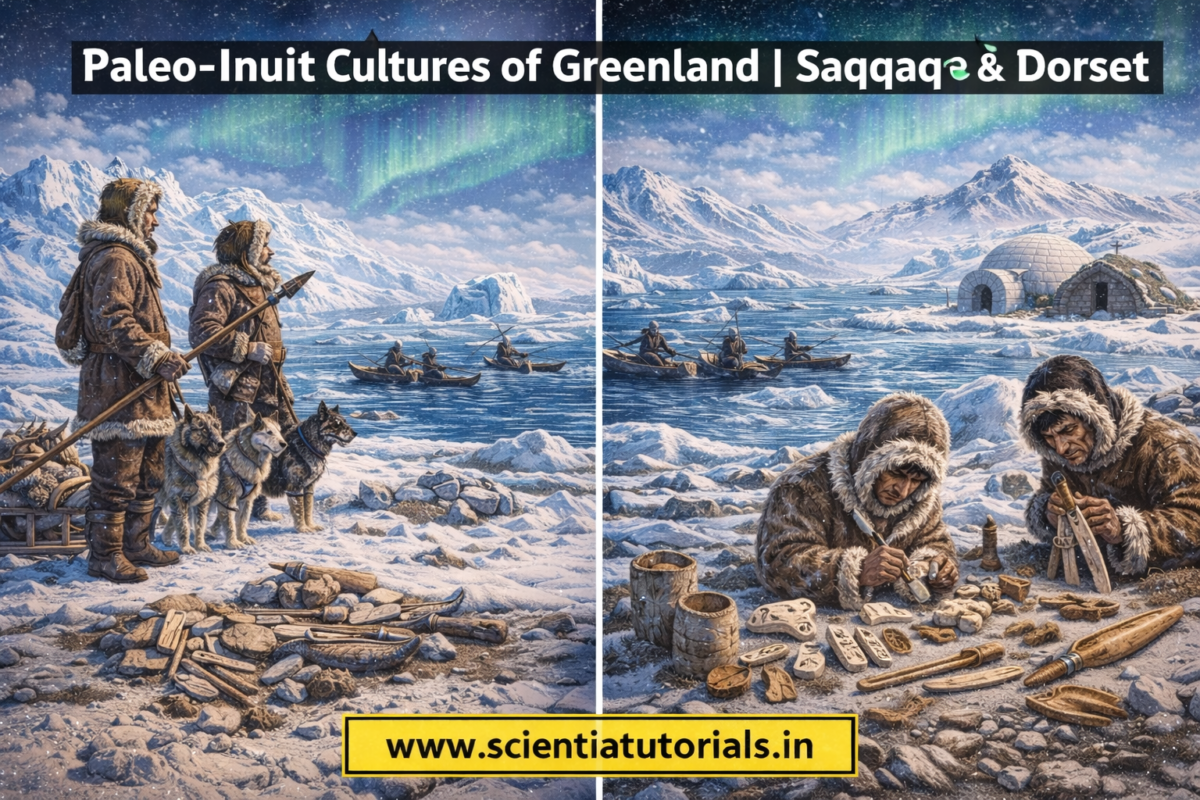

Paleo-Inuit Cultures of Greenland | Saqqaq and Dorset Traditions
Module 1: Greenland in the Prehistoric and Indigenous World
Lesson: Paleo-Inuit Cultures – Saqqaq and Dorset Traditions
Era Framework: Prehistoric Period to c. 10th Century CE
Chronologically Structured Study Module
Introduction: Paleo-Inuit Cultures in the History of Arctic Greenland
The prehistoric history of Greenland is inseparably linked with the development of Paleo-Inuit cultures that adapted to one of the most extreme environments on Earth. Long before the arrival of later Inuit societies or Norse settlers, early human communities established distinctive cultural traditions based on hunting, mobility, and deep environmental knowledge. Among these, the Saqqaq and Dorset traditions represent the most significant Paleo-Inuit cultural phases in Greenland.
This lesson examines the Saqqaq and Dorset cultures chronologically, tracing their origins, settlement patterns, technologies, subsistence strategies, belief systems, and eventual decline. By situating these traditions within broader Arctic human migration, the lesson highlights how early Indigenous cultures adapted successfully—though not permanently—to Greenland’s harsh ecological constraints.
I. Understanding the Concept of Paleo-Inuit Cultures
1. Definition of Paleo-Inuit
The term Paleo-Inuit refers to the earliest prehistoric Arctic peoples who inhabited Greenland and surrounding Arctic regions before the emergence of later Inuit (Thule) cultures. These communities were not agricultural societies; instead, they relied entirely on hunting, fishing, and gathering in cold environments.
Paleo-Inuit cultures are distinguished by:
- Small, mobile populations
- Stone, bone, and ivory technologies
- Seasonal settlement patterns
- Dependence on marine and Arctic fauna
2. Chronological Placement
Paleo-Inuit cultures in Greenland flourished between approximately 2500 BCE and 500 CE, though exact dates vary regionally. The Saqqaq culture represents an earlier phase, while the Dorset tradition emerged later and displayed greater specialization.
II. Environmental Context of Paleo-Inuit Greenland
1. Arctic Geography and Climate
Greenland’s geography strongly shaped Paleo-Inuit life. The ice-covered interior rendered most of the island uninhabitable, confining settlement to coastal areas. Climate conditions included:
- Long, cold winters
- Short summers
- Seasonal extremes of light and darkness
These conditions imposed strict limits on population size and settlement permanence.
2. Resource Availability
Despite environmental harshness, Greenland’s coastal ecosystems supported seals, walrus, whales, fish, and seabirds. Paleo-Inuit survival depended on precise seasonal exploitation of these resources.
III. The Saqqaq Culture: Origins and Chronology
1. Emergence of the Saqqaq Tradition
The Saqqaq culture is among the earliest known human cultures in Greenland, emerging around 2500 BCE. Archaeological evidence suggests that Saqqaq people migrated from the Canadian Arctic, carrying with them Arctic hunting traditions adapted to colder environments.
This migration formed part of a broader wave of Paleo-Inuit expansion across the Arctic.
2. Geographic Distribution
Saqqaq settlements were primarily concentrated in:
- Western Greenland
- Southern coastal regions
These areas offered relatively stable access to marine mammals and seasonal ice conditions suitable for hunting.
IV. Saqqaq Subsistence and Economic Life
1. Hunting-Based Economy
The Saqqaq economy relied on:
- Seal hunting
- Fishing
- Hunting of caribou and Arctic fox
Marine resources were especially vital, providing food, oil, clothing materials, and tools.
2. Seasonal Mobility
Saqqaq communities practiced seasonal migration. They moved between coastal and inland zones based on animal availability, ensuring survival in a resource-limited environment.
V. Saqqaq Technology and Material Culture
1. Tool-Making Traditions
Saqqaq tools were made from:
- Stone
- Bone
- Ivory
Common tools included:
- Small blades
- Scrapers
- Harpoon heads
These tools demonstrate high levels of craftsmanship and environmental adaptation.
2. Clothing and Shelter
Saqqaq people wore insulated clothing made from animal skins and lived in temporary shelters such as skin tents or lightly built dwellings. These structures emphasized portability rather than permanence.
VI. Social Organization and Cultural Systems of the Saqqaq
1. Kinship-Based Groups
Social organization centered on small kin groups. Cooperation in hunting and sharing resources was essential for survival.
2. Belief Systems
Although direct evidence of Saqqaq belief systems is limited, archaeological findings suggest animistic worldviews in which animals were regarded as spiritually significant. Such beliefs reinforced sustainable hunting practices.
VII. Decline of the Saqqaq Culture
1. Climatic Factors
Around 800–500 BCE, climatic cooling reduced resource availability. Changing ice conditions disrupted hunting patterns and migration routes.
2. Cultural Discontinuity
The Saqqaq culture gradually disappeared from Greenland, likely due to environmental stress rather than conflict. Their decline illustrates the vulnerability of early Arctic societies to climate change.
VIII. The Dorset Culture: Emergence and Expansion
1. Origins of the Dorset Tradition
The Dorset culture emerged after the Saqqaq decline, around 800 BCE, and represented a new phase of Paleo-Inuit adaptation. Dorset peoples also originated from the Canadian Arctic but developed more specialized Arctic survival strategies.
2. Geographic Spread
Dorset settlements extended across:
- Northern Greenland
- Western Greenland
- High Arctic regions
Their ability to inhabit more extreme environments marks an important development in Arctic cultural history.
IX. Dorset Subsistence Strategies
1. Specialized Marine Hunting
The Dorset economy was heavily focused on marine mammals, particularly seals. Unlike earlier cultures, Dorset communities refined hunting techniques suitable for ice-covered waters.
2. Winter Survival Strategies
Dorset people demonstrated exceptional winter adaptation, allowing longer occupation of Arctic regions previously considered marginal.
X. Dorset Technology and Innovation
1. Tool Specialization
Dorset tools were highly specialized and included:
- Advanced harpoon heads
- Ice-edge hunting equipment
- Finely crafted bone and ivory artifacts
These tools reflect adaptation to hunting in icy conditions rather than open water.
2. Absence of Certain Technologies
Notably, Dorset culture lacked some technologies seen in later Inuit societies, such as large boats or dog sleds. This technological limitation may have affected long-term survival.
XI. Dorset Social and Cultural Life
1. Settlement Patterns
Dorset settlements were small and often semi-permanent. They were carefully located near reliable hunting grounds.
2. Symbolic and Artistic Expression
Archaeological evidence reveals Dorset artistic expression through carved figurines and symbolic objects. These artifacts suggest complex belief systems and ritual practices.
XII. Belief Systems and Worldviews of the Dorset Culture
Dorset spirituality appears to have been deeply connected to the Arctic environment. Animal symbolism, especially related to seals and bears, indicates ritualized hunting practices and spiritual respect for nature.
Such belief systems strengthened cultural identity and ecological balance.
XIII. Decline of the Dorset Culture
1. Environmental Stress
Between 500 and 1000 CE, climatic changes once again altered Arctic ecosystems. Reduced sea ice stability and shifting animal populations undermined Dorset subsistence strategies.
2. Cultural Replacement
The Dorset culture eventually disappeared, possibly due to environmental stress combined with the arrival of new populations better adapted to changing conditions.
XIV. Saqqaq and Dorset Cultures in Comparative Perspective
1. Similarities
Both cultures:
- Were hunter-gatherers
- Relied on marine resources
- Practiced seasonal mobility
- Maintained small populations
2. Differences
Saqqaq culture was earlier and less specialized, while Dorset culture showed advanced adaptation to extreme Arctic conditions but lacked certain technologies.
XV. Significance of Paleo-Inuit Cultures in Greenlandic History
1. Foundations of Indigenous Adaptation
Saqqaq and Dorset cultures laid the foundations for later Indigenous survival strategies in Greenland. Their accumulated environmental knowledge shaped Arctic cultural traditions.
2. Lessons in Human Resilience
These cultures demonstrate both the possibilities and limits of human adaptation. While remarkably resilient, they remained vulnerable to climatic change.
Conclusion: Paleo-Inuit Legacies in Greenland
The Saqqaq and Dorset traditions represent crucial chapters in Greenland’s prehistoric past. Through innovation, cooperation, and environmental knowledge, Paleo-Inuit cultures transformed an extreme Arctic landscape into a lived human space. Their rise and decline reveal the dynamic interaction between humans and climate in prehistory.
Understanding these cultures is essential for grasping the deeper Indigenous foundations of Greenlandic history and for appreciating how early human societies responded to environmental challenges long before the modern era.
Short Answer Type Questions
Module 1 – Lesson: Paleo-Inuit Cultures: Saqqaq and Dorset Traditions
1. What does the term “Paleo-Inuit” refer to?
Paleo-Inuit refers to the earliest prehistoric Arctic hunter-gatherer societies that lived in Greenland before later Inuit cultures.
2. Which two major Paleo-Inuit cultural traditions developed in Greenland?
The Saqqaq and Dorset traditions were the two major Paleo-Inuit cultural traditions.
3. During which period did Paleo-Inuit cultures flourish in Greenland?
Paleo-Inuit cultures flourished roughly between 2500 BCE and 500 CE.
4. From where did the Saqqaq culture originate?
The Saqqaq culture originated from the Canadian Arctic region.
5. In which regions of Greenland was the Saqqaq culture mainly found?
The Saqqaq culture was mainly found in western and southern coastal Greenland.
6. What was the primary subsistence base of the Saqqaq culture?
The Saqqaq economy was based on hunting marine mammals, fishing, and limited terrestrial hunting.
7. Why was seasonal mobility important for the Saqqaq people?
Seasonal mobility allowed them to follow animal migrations and adapt to changing resource availability.
8. What materials were commonly used in Saqqaq tool-making?
Stone, bone, and ivory were commonly used materials.
9. What type of shelters did the Saqqaq people use?
They used temporary shelters such as skin tents and lightly built dwellings.
10. How was Saqqaq society socially organized?
Saqqaq society was organized into small kin-based groups emphasizing cooperation.
11. What factors contributed to the decline of the Saqqaq culture?
Climatic cooling and reduced resource availability contributed to its decline.
12. When did the Dorset culture emerge in Greenland?
The Dorset culture emerged around 800 BCE.
13. How did the Dorset culture differ from the Saqqaq culture?
The Dorset culture showed greater specialization in Arctic survival, especially winter adaptation.
14. Which areas of Greenland did the Dorset culture inhabit?
The Dorset culture inhabited northern, western, and High Arctic regions of Greenland.
15. What was the main economic focus of the Dorset culture?
The Dorset economy focused heavily on seal hunting and marine resources.
16. Why are Dorset tools considered highly specialized?
They were designed specifically for hunting in icy and ice-edge environments.
17. Name one technology absent in Dorset culture that appeared later.
Large boats or dog sleds were absent in Dorset culture.
18. What evidence suggests symbolic or ritual practices among the Dorset people?
Carved figurines and symbolic artifacts indicate ritual and spiritual practices.
19. How did Dorset settlement patterns differ from Saqqaq patterns?
Dorset settlements were often more semi-permanent and focused on winter occupation.
20. What role did belief systems play in Paleo-Inuit societies?
Belief systems promoted respect for animals and sustainable use of resources.
21. Why were Paleo-Inuit populations generally small?
Limited Arctic resources could not support large populations.
22. How did environmental change affect Dorset culture?
Climatic shifts altered sea ice and animal availability, undermining subsistence systems.
23. What happened to the Dorset culture by the end of the first millennium CE?
The Dorset culture disappeared, likely due to environmental stress and cultural replacement.
24. Mention one similarity between Saqqaq and Dorset cultures.
Both relied on hunting marine mammals and practiced seasonal mobility.
25. Why are Saqqaq and Dorset cultures historically significant?
They represent early human adaptation to extreme Arctic environments and laid foundations for later Indigenous traditions.
Long Answer Type Questions
Module 1 – Lesson: Paleo-Inuit Cultures: Saqqaq and Dorset Traditions
1. Explain the concept of Paleo-Inuit cultures and their significance in the prehistoric history of Greenland.
Answer:
Paleo-Inuit cultures represent the earliest human societies to inhabit Greenland during prehistory. These cultures were composed of small, mobile hunter-gatherer groups who adapted to extreme Arctic conditions long before the emergence of later Inuit societies. Their significance lies in demonstrating early human resilience, innovation, and environmental adaptation. The Saqqaq and Dorset traditions illustrate how humans successfully exploited Arctic ecosystems despite severe climatic constraints, laying the foundations for Indigenous cultural development in Greenland.
2. Discuss the environmental context in which Paleo-Inuit cultures developed.
Answer:
Paleo-Inuit cultures developed within a harsh Arctic environment characterized by long winters, short summers, extreme cold, and seasonal light variation. The ice-covered interior of Greenland forced settlement along coastal regions where marine resources were available. Permafrost prevented agriculture, making hunting and fishing essential. These environmental constraints shaped every aspect of Paleo-Inuit life, including technology, social organization, and belief systems.
3. Trace the origins and migration of the Saqqaq culture into Greenland.
Answer:
The Saqqaq culture emerged around 2500 BCE and originated from the Canadian Arctic. Saqqaq groups migrated into Greenland during favorable climatic periods, following coastal routes. Their movement was gradual and based on ecological opportunity rather than population pressure. This migration marked one of the earliest human entries into Greenland and represents a significant phase of Arctic human expansion.
4. Examine the settlement patterns of the Saqqaq culture.
Answer:
Saqqaq settlements were mainly concentrated along western and southern coastal Greenland. These areas offered access to marine mammals, fish, and relatively stable ice conditions. Settlements were generally temporary or seasonal, reflecting the need for mobility in response to changing resource availability. Permanent inland settlements were absent due to ice coverage and limited resources.
5. Analyze the subsistence economy of the Saqqaq culture.
Answer:
The Saqqaq economy was based on hunting and gathering. Marine mammals such as seals formed the primary food source, supplemented by fishing and hunting of caribou and Arctic fox. Animal products were used comprehensively for food, fuel, clothing, and tools. This subsistence strategy required detailed environmental knowledge and seasonal planning.
6. Describe the technological characteristics of Saqqaq material culture.
Answer:
Saqqaq technology consisted of tools made from stone, bone, and ivory. Small blades, scrapers, and harpoon heads were common. These tools were portable, efficient, and well-suited to Arctic hunting conditions. Saqqaq material culture reflects practical adaptation rather than technological complexity.
7. Discuss the social organization of the Saqqaq people.
Answer:
Saqqaq society was organized into small kin-based groups. Cooperation was essential for hunting and survival, and resources were shared to reduce risk. Social equality was likely emphasized, with leadership based on experience rather than formal hierarchy. Such organization supported survival in a harsh and unpredictable environment.
8. Explain the possible belief systems of the Saqqaq culture.
Answer:
Although direct evidence is limited, Saqqaq belief systems likely emphasized animism and spiritual respect for animals. Hunting rituals may have reinforced ethical behavior toward nature. These beliefs helped regulate resource use and maintain ecological balance.
9. Assess the factors responsible for the decline of the Saqqaq culture.
Answer:
The decline of the Saqqaq culture around 800–500 BCE is primarily attributed to climatic cooling. Environmental change reduced resource availability and disrupted established hunting patterns. The Saqqaq disappearance reflects the vulnerability of early Arctic societies to climatic instability rather than conflict or invasion.
10. Discuss the emergence of the Dorset culture in Greenland.
Answer:
The Dorset culture emerged around 800 BCE following the decline of the Saqqaq tradition. Originating from the Canadian Arctic, Dorset groups introduced more specialized Arctic survival strategies. Their emergence represents a new phase of Paleo-Inuit adaptation to colder and more extreme environments.
11. Examine the geographic spread of the Dorset culture.
Answer:
Dorset settlements extended across northern, western, and High Arctic Greenland. This wide distribution demonstrates their ability to survive in regions previously considered marginal. Dorset expansion highlights increasing human adaptation to extreme Arctic conditions.
12. Analyze the subsistence strategies of the Dorset culture.
Answer:
The Dorset economy was highly specialized and focused on marine mammals, particularly seals. Ice-edge hunting was central to their survival strategy. Unlike earlier cultures, Dorset groups demonstrated improved winter adaptation, allowing longer seasonal occupation.
13. Evaluate the technological innovations of the Dorset tradition.
Answer:
Dorset technology included advanced harpoon heads, specialized ice-edge hunting tools, and finely crafted bone and ivory artifacts. These innovations reflect adaptation to hunting in frozen environments. However, the absence of large boats and dog sleds limited long-distance mobility.
14. Discuss Dorset settlement patterns and winter adaptation.
Answer:
Dorset settlements were small and often semi-permanent, strategically located near reliable hunting grounds. Their ability to survive long Arctic winters marks a significant advancement in human adaptation to cold environments.
15. Examine the artistic and symbolic expressions of the Dorset culture.
Answer:
Dorset culture is notable for its artistic expression, including carved figurines and symbolic objects. These artifacts suggest complex belief systems and ritual practices. Art played a role in reinforcing cultural identity and spiritual relationships with nature.
16. Analyze the belief systems of the Dorset people.
Answer:
Dorset belief systems appear deeply connected to the Arctic environment. Animal symbolism, particularly involving seals and bears, indicates ritualized hunting practices and spiritual respect for animals. These beliefs supported sustainable subsistence.
17. Assess the reasons for the decline of the Dorset culture.
Answer:
The Dorset culture declined between 500 and 1000 CE due to climatic changes that altered sea ice conditions and animal availability. Environmental stress, combined with the arrival of new populations better adapted to changing conditions, likely contributed to Dorset disappearance.
18. Compare the Saqqaq and Dorset cultures in terms of adaptation.
Answer:
Both cultures relied on hunting and seasonal mobility, but the Dorset culture exhibited greater specialization and winter adaptation. Saqqaq culture was earlier and less technologically specialized, while Dorset culture demonstrated advanced Arctic survival strategies.
19. Discuss the role of climate change in shaping Paleo-Inuit cultural continuity.
Answer:
Climate change repeatedly influenced Paleo-Inuit settlement patterns. Warming phases enabled migration and occupation, while cooling phases caused cultural decline or abandonment. This demonstrates the close relationship between environment and human survival in the Arctic.
20. Evaluate the contribution of Paleo-Inuit cultures to later Indigenous traditions.
Answer:
Paleo-Inuit cultures contributed foundational knowledge of Arctic survival, subsistence strategies, and environmental adaptation. Later Indigenous societies built upon this accumulated experience, refining technologies and cultural practices.
21. Explain why Paleo-Inuit societies did not develop permanent urban settlements.
Answer:
Limited resources, extreme climate, and the need for mobility prevented the development of permanent settlements. Survival depended on flexibility rather than sedentary life.
22. Conclude by assessing the historical importance of Saqqaq and Dorset traditions.
Answer:
The Saqqaq and Dorset traditions are historically important because they demonstrate early human resilience and adaptation in extreme environments. Their rise and decline reveal both the possibilities and limits of prehistoric human survival in the Arctic. These cultures form a crucial foundation for understanding Greenland’s Indigenous past and its long-term historical trajectory.
MCQs with Answers and Detailed Explanations
Module 1 – Lesson: Paleo-Inuit Cultures: Saqqaq and Dorset Traditions
1. The term “Paleo-Inuit” refers to:
A. Medieval Norse settlers
B. Early European explorers
C. Prehistoric Arctic hunter-gatherers
D. Modern Inuit communities
Correct Answer: C
Explanation:
Paleo-Inuit refers to the earliest prehistoric Arctic peoples who lived in Greenland and surrounding regions before the later Inuit (Thule) culture.
2. The two major Paleo-Inuit cultural traditions in Greenland were:
A. Thule and Norse
B. Saqqaq and Dorset
C. Viking and Inuit
D. Aleut and Yupik
Correct Answer: B
Explanation:
The Saqqaq and Dorset traditions represent the main Paleo-Inuit cultural phases in Greenland’s prehistoric history.
3. The Saqqaq culture is generally dated to:
A. 500 CE – 1200 CE
B. 800 BCE – 500 CE
C. c. 2500 BCE – 800 BCE
D. c. 1000 CE – 1500 CE
Correct Answer: C
Explanation:
The Saqqaq culture emerged around 2500 BCE and declined by about 800–500 BCE.
4. The Saqqaq culture most likely originated from:
A. Northern Europe
B. Central Asia
C. Canadian Arctic regions
D. Siberia
Correct Answer: C
Explanation:
Archaeological evidence indicates that Saqqaq peoples migrated from the Canadian Arctic into Greenland.
5. Saqqaq settlements were mainly concentrated in:
A. Greenland’s ice-covered interior
B. Eastern mountain zones
C. Western and southern coastal regions
D. Central Greenland plateau
Correct Answer: C
Explanation:
Coastal regions provided access to marine resources essential for survival.
6. The primary subsistence strategy of the Saqqaq culture was:
A. Agriculture
B. Pastoral nomadism
C. Hunting and fishing
D. Plantation farming
Correct Answer: C
Explanation:
Due to Arctic conditions, Saqqaq people relied on hunting marine mammals, fishing, and limited terrestrial hunting.
7. Which material was NOT commonly used in Saqqaq tool-making?
A. Stone
B. Bone
C. Ivory
D. Iron
Correct Answer: D
Explanation:
Iron technology was unknown to Paleo-Inuit societies; tools were made from locally available materials.
8. Seasonal mobility among Saqqaq communities was necessary mainly to:
A. Expand territory
B. Follow animal migrations
C. Engage in trade
D. Avoid conflict
Correct Answer: B
Explanation:
Seasonal movement allowed Saqqaq groups to exploit different resources throughout the year.
9. The decline of the Saqqaq culture is most closely linked to:
A. Warfare with Dorset groups
B. Overpopulation
C. Climatic cooling and environmental stress
D. Technological stagnation
Correct Answer: C
Explanation:
Cooling climates reduced resource availability, undermining Saqqaq subsistence systems.
10. The Dorset culture emerged in Greenland around:
A. 2500 BCE
B. 1500 BCE
C. 800 BCE
D. 500 CE
Correct Answer: C
Explanation:
The Dorset culture appeared after the Saqqaq decline, around 800 BCE.
11. Compared to Saqqaq culture, Dorset culture was characterized by:
A. Less specialization
B. Greater winter adaptation
C. Agricultural practices
D. Large permanent settlements
Correct Answer: B
Explanation:
Dorset culture showed advanced adaptation to extreme Arctic winter conditions.
12. Dorset settlements extended mainly across:
A. Southern Greenland only
B. Greenland’s interior
C. Northern and western Greenland
D. Eastern Europe
Correct Answer: C
Explanation:
Dorset culture occupied northern, western, and High Arctic regions.
13. The economic life of the Dorset culture focused primarily on:
A. Caribou herding
B. Seal hunting
C. Agriculture
D. Trade networks
Correct Answer: B
Explanation:
Seal hunting, especially in ice-edge environments, formed the backbone of the Dorset economy.
14. Which technological feature best distinguishes Dorset culture?
A. Use of iron tools
B. Large sailing vessels
C. Specialized ice-edge hunting tools
D. Extensive farming equipment
Correct Answer: C
Explanation:
Dorset tools were highly specialized for hunting marine mammals in icy conditions.
15. A notable absence in Dorset technology was:
A. Harpoon heads
B. Bone tools
C. Dog sleds and large boats
D. Artistic expression
Correct Answer: C
Explanation:
Unlike later Inuit cultures, Dorset groups did not use dog sleds or large boats.
16. Dorset artistic expression is evidenced by:
A. Cave paintings
B. Monumental architecture
C. Carved figurines and symbolic objects
D. Written inscriptions
Correct Answer: C
Explanation:
Dorset culture produced small carvings suggesting ritual and symbolic practices.
17. What do Dorset symbolic artifacts suggest about their culture?
A. Complete lack of belief systems
B. Highly centralized political authority
C. Complex spiritual and ritual life
D. Agricultural fertility rituals
Correct Answer: C
Explanation:
Symbolic artifacts indicate spiritual beliefs and ritual practices linked to nature and animals.
18. The belief systems of Paleo-Inuit cultures generally emphasized:
A. Human domination over nature
B. Respect for animals and environment
C. Technological superiority
D. Agricultural productivity
Correct Answer: B
Explanation:
Animistic beliefs encouraged sustainable use of limited Arctic resources.
19. The decline of the Dorset culture occurred mainly between:
A. 2000–1500 BCE
B. 1000–500 BCE
C. 500–1000 CE
D. After 1500 CE
Correct Answer: C
Explanation:
Environmental changes and cultural transitions contributed to Dorset disappearance during this period.
20. One major similarity between Saqqaq and Dorset cultures was:
A. Agricultural dependence
B. Seasonal mobility
C. Urban settlement
D. Use of iron tools
Correct Answer: B
Explanation:
Both cultures relied on seasonal movement to access resources.
21. Why were Paleo-Inuit populations generally small?
A. Cultural preference for isolation
B. Political fragmentation
C. Limited Arctic resources
D. Frequent warfare
Correct Answer: C
Explanation:
Harsh environmental conditions could not support large populations.
22. Which factor most strongly shaped Paleo-Inuit settlement patterns?
A. Political borders
B. Trade routes
C. Environmental and climatic conditions
D. Religious authority
Correct Answer: C
Explanation:
Climate, ice conditions, and resource availability determined where people could live.
23. Paleo-Inuit societies did NOT develop permanent cities mainly because:
A. They rejected social organization
B. Agriculture was impossible
C. They lacked belief systems
D. Trade was discouraged
Correct Answer: B
Explanation:
Permafrost and extreme cold prevented sedentary agricultural life.
24. In comparative perspective, Dorset culture was:
A. Less adapted to Arctic conditions than Saqqaq
B. More technologically advanced than later Inuit
C. More specialized than Saqqaq but less adaptable than Thule Inuit
D. Completely isolated from climate change
Correct Answer: C
Explanation:
Dorset culture showed specialization but lacked some adaptive technologies of later Inuit societies.
25. The historical importance of Saqqaq and Dorset cultures lies in their:
A. Creation of early Arctic states
B. Expansion of trade empires
C. Demonstration of early human Arctic adaptation
D. Development of written traditions
Correct Answer: C
Explanation:
These cultures illustrate how humans adapted to extreme Arctic environments long before recorded history.